Kibble Dog Food Attractants: How to Improve Aroma, Taste, and Palatability
Dry dog food may offer balanced nutrition, convenient storage, and efficient production, but none of these advantages matter if dogs refuse to eat it. Ingredients, extrusion conditions, fat quality, storage time, and package performance can all affect the aroma and taste of finished kibble. For manufacturers, this makes palatability an essential part of both product development and quality control.
Kibble dog food attractants, also called dog food palatants or palatability enhancers, are designed to make dry food more appealing through aroma, taste, and mouthfeel. A suitable attractant can help increase initial interest in the bowl, encourage continued eating, and reduce variation in feeding response between production batches.
However, selecting an attractant is not simply a matter of choosing the strongest-smelling product. The base formula, target market, coating equipment, cost requirements, and desired feeding performance all influence which solution will work best.

What Are Kibble Dog Food Attractants?
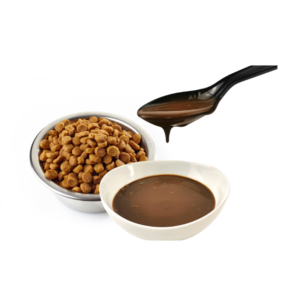
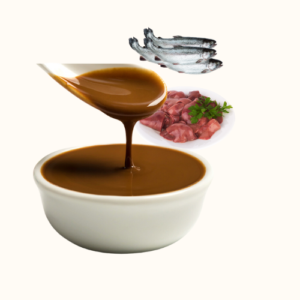
Kibble dog food attractants are ingredients applied to or incorporated into dry dog food to improve sensory appeal. They are commonly produced from animal-protein ingredients such as chicken liver, poultry, beef, or fish, often combined with hydrolysis, fermentation, yeast ingredients, or Maillard-reaction technology.
In the pet food industry, the terms attractant, palatant, flavor enhancer, and palatability enhancer are sometimes used interchangeably. Their practical function is broader than adding a single flavor. An effective palatant should support several stages of the eating experience:
- Initial attraction: The aroma encourages the dog to approach and investigate the food.
- First-bite acceptance: The surface taste motivates the dog to take the first bites.
- Continued consumption: Flavor and mouthfeel help maintain interest throughout the meal.
- Repeat preference: A consistent sensory profile supports acceptance when the food is offered again.
This is why a product with a very strong odor does not automatically deliver the best feeding result. Palatability must be evaluated through controlled feeding trials rather than aroma alone.
Why Kibble Sometimes Needs a Palatability Enhancer
Dry dog food is exposed to heat, pressure, and moisture changes during extrusion and drying. These processes are necessary to create a stable, safe kibble, but they can also reduce or alter the natural aroma of meat ingredients. Other formulation and processing factors may further limit acceptance.
1. High levels of plant-based ingredients
Formulas containing more grains, legumes, fiber sources, or plant proteins may have a sensory profile that is less attractive to some dogs. A protein-based palatant can help build a more appealing meaty aroma and taste on the kibble surface.
2. Reduced-fat or specialized formulas
Fat carries aroma and contributes to mouthfeel. Weight-management or other reduced-fat diets may therefore need extra palatability support. The attractant must be selected carefully so it improves acceptance without conflicting with the product’s nutritional positioning.
3. Variation in raw materials
Natural ingredients can vary by origin, season, processing method, and storage conditions. These differences may affect the finished kibble’s aroma. A standardized dog food attractant can help manufacturers maintain a more consistent sensory profile from batch to batch.
4. Competitive product positioning
In a crowded retail market, dogs’ acceptance can directly influence repeat purchases. If a dog hesitates, eats slowly, or leaves food in the bowl, the owner may interpret the behavior as a product-quality problem—even when the nutritional formulation is sound.
5. Aroma loss during storage
Volatile aromas gradually change after production. Oxidation, unsuitable packaging, excessive headspace, or poor storage conditions can accelerate this process. A stable palatant and a well-designed antioxidant and packaging system can help preserve the intended sensory profile.
Liquid vs. Powder Dog Food Attractants
Kibble palatants are most commonly supplied in liquid, paste, or powder form. Each format has different processing advantages.
| Palatant format | Main function | Typical advantages | Best suited for |
|---|---|---|---|
| Liquid or paste | Creates an aromatic, savory coating | Good surface coverage; supports taste and mouthfeel; easy to combine with fat coating | Standard and premium dry dog food lines with liquid dosing equipment |
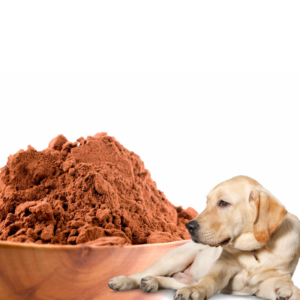
| Powder | Provides concentrated surface aroma and flavor | Easy handling; strong top-note impact; useful as a final coating layer | Dry coating systems or formulas needing an extra aroma boost |
| Liquid + powder | Builds multiple sensory layers | Combines coating coverage with a strong final aroma; can improve overall feeding performance | Formulas with higher palatability targets or difficult-to-mask base notes |
The best choice depends on the production line and the formula. A liquid product may distribute more evenly, while a powder may deliver a strong aroma at the kibble surface. In many applications, using liquid and powder palatants together provides more complete sensory coverage than relying on either format alone.
How Kibble Dog Food Attractants Work
Dogs evaluate food through a combination of smell, taste, texture, temperature, and previous experience. Because kibble is relatively dry, surface-applied ingredients play an especially important role.
A palatant can improve performance by:
- Adding meat-derived aroma compounds that are detectable before the first bite
- Providing savory amino acids and peptides from hydrolyzed animal proteins
- Supporting umami and roasted notes through yeast or Maillard-reaction ingredients
- Improving the distribution of flavor across the kibble surface
- Helping mask less desirable notes from vitamins, minerals, plant proteins, or functional ingredients
- Creating a more consistent eating experience across batches
Protein hydrolysis is particularly valuable because it breaks larger proteins into smaller peptides and amino acids. These components can contribute both taste and aroma precursors. Maillard-reaction processing can then develop roasted, meaty notes, depending on the desired flavor profile.
Recommended Coating Sequence for Dry Dog Food
Application method can be as important as palatant selection. Even a high-performance product may give disappointing results if it is applied unevenly or exposed to unsuitable processing conditions.
A commonly recommended post-extrusion coating order is:
- Apply fat or oil. This creates coverage and supports flavor adhesion.
- Apply the liquid or paste palatant. Ensure uniform distribution across the kibble surface.
- Apply the powder palatant last. The final dry layer can strengthen the surface aroma and reduce loss of the most noticeable top notes.
For many dry dog food applications, powder palatants may be evaluated at approximately 1%–2%, while liquid or paste palatants may be tested at approximately 4%–6%. Some economy formulas may require a higher liquid inclusion level, potentially up to around 10%, depending on the base ingredients and performance target.

These percentages should be treated as starting points rather than universal rules. The final inclusion rate should be determined through bench trials, production-line testing, nutritional review, and feeding evaluation.
How to Choose the Right Dog Food Attractant
Match the attractant to the base formula
A chicken-liver palatant may perform differently on a high-poultry formula than on a grain-rich or beef-positioned product. Share the complete base formula—or at least its main protein, fat, fiber, and functional ingredients—with the palatant supplier. This helps the supplier recommend a product with a compatible flavor direction and masking capacity.
Define the actual performance target
“Improve palatability” is too broad for efficient product development. Manufacturers should define whether the priority is:
- Faster approach to the bowl
- Higher first-bite acceptance
- Greater total intake
- Preference over a benchmark product
- Better acceptance of vitamins, minerals, or functional ingredients
- More consistent performance between batches
A clear target makes it easier to select the correct trial design and evaluate results.
Consider equipment compatibility
Check viscosity, pumpability, spray-nozzle requirements, mixing behavior, and coating temperature before a plant trial. For powders, review flowability, dust control, and adhesion. A palatant that performs well in a laboratory must still be practical on the full production line.
Evaluate more than price per kilogram
The lowest-cost attractant is not always the most economical solution. Compare cost in use, which includes inclusion rate, production efficiency, feeding performance, and the effect on repeat purchase. A more effective product used at a lower level may provide better total value.
Verify stability and quality documentation
Ask the supplier about raw-material control, batch consistency, shelf life, storage conditions, microbiological specifications, and relevant regulatory documents. Palatants should also be evaluated for compatibility with the destination market’s pet food requirements.
How to Test Palatability Properly
Instrumental aroma data and chemical analysis are useful, but dogs ultimately determine whether a food is palatable. Feeding trials should therefore be part of the development process.
Common evaluation methods include:
One-bowl acceptance test
One food is offered to measure approach, first choice, consumption rate, and total intake. This method helps assess basic acceptance but does not show preference against another product.

Two-bowl preference test
The trial food and a control or competitor product are offered at the same time. Bowl position should be alternated to reduce side bias. First choice and intake ratio can then be compared.
Repeated feeding test
The same diet is offered over multiple meals or days. This helps identify whether the initial attraction is sustained rather than driven by novelty.
For reliable conclusions, keep kibble size, shape, moisture, fat level, freshness, serving quantity, and test conditions as consistent as possible. If several variables change at once, it becomes difficult to determine whether the attractant caused the result.
Common Mistakes to Avoid
Using attractants to hide a quality problem
A palatant should enhance a sound formula; it should not be used to disguise rancid fat, contaminated ingredients, poor drying, or inadequate packaging. Food safety and raw-material quality must come first.
Selecting by smell alone
Human aroma preference does not reliably predict canine preference. A roasted odor that seems appealing to a product developer may not produce the best intake result in dogs.
Applying the product before excessive heat exposure
Some volatile aroma compounds can be lost when exposed to high temperature for too long. Post-extrusion coating is generally preferred when the goal is to maximize surface aroma, although the best process depends on the specific product.
Changing the formula during the attractant trial
If the fat source, moisture, kibble density, or key ingredients change during testing, the results may not be comparable. Use a stable control and change one main variable at a time.
Ignoring oxidation control
Palatability can decline when fats oxidize. Attractant selection should be combined with appropriate antioxidants, packaging, and storage conditions to protect the finished product throughout its shelf life.
Profypet Palatant Options for Kibble Dog Food
Profypet supplies liquid and powder palatability solutions for dry dog food manufacturers. Product selection can be matched to the formula, price position, processing line, and feeding-performance target.
Examples include:

- MYG-QT-01: A cost-effective liquid palatant based on chicken liver with a beef flavor direction, suitable for value-focused dry dog food.
- YCG-QT-916: A chicken-liver-flavored liquid palatant designed for medium-to-high palatability requirements.
- YCG-QT-1011: A higher-performance liquid solution for formulas with more demanding feeding targets.
- MYF-QT-01: A powder palatant using Maillard-reaction technology, with salt and yeast ingredients to build savory notes.
- MYF-QT-02: A deep-brown powder palatant with a strong aroma profile and added antioxidant support.
Because every kibble formula behaves differently, the most reliable approach is to compare samples on the actual base product. Profypet can recommend a starting product and inclusion range based on your ingredient list, processing method, target market, and benchmark food.
Conclusion
Kibble dog food attractants can do much more than add a noticeable smell. When properly selected and applied, they can improve initial attraction, first-bite acceptance, continued consumption, and sensory consistency. The best results come from matching the liquid, powder, or combined palatant system to the base formula and validating it through controlled production and feeding trials.
If you are developing a new dry dog food or trying to improve an existing recipe, send Profypet your base formula, current coating process, target inclusion cost, and benchmark product. Our team can help you identify a suitable palatability solution and prepare samples for evaluation.
Contact Profypet to discuss a kibble dog food attractant for your formula.
Frequently Asked Questions
What is the difference between a dog food attractant and a flavor?
A flavor primarily changes the sensory character of the food. A dog food attractant or palatant is formulated specifically to improve the animal’s response, which may include approach, first choice, intake, and repeat acceptance. In commercial pet food, the terms may overlap, so feeding-test data is more important than the product name.
Are liquid or powder palatants better for kibble?
Neither format is always better. Liquid palatants provide broad surface coverage and work well with fat-coating systems. Powder palatants can deliver concentrated surface aroma. Combining both may provide stronger overall performance, depending on the formula and equipment.
How much attractant should be added to dry dog food?
As an initial trial range, powder palatants may be tested at about 1%–2%, while liquid or paste products may be tested at about 4%–6%. The correct dosage depends on the product, formula, process, nutritional limits, and desired feeding result.
When should palatants be applied to kibble?
They are commonly applied after extrusion and drying. A typical sequence is fat first, liquid palatant second, and powder palatant last. This helps create even coverage and preserve surface aroma.
Can an attractant improve a low-meat dog food formula?
It can help create a more appealing meat-like aroma and taste, but it cannot replace good nutrition, safe ingredients, proper processing, or oxidation control. The attractant should be part of a complete formulation and quality strategy.
How should manufacturers compare two palatants?
Apply each palatant to the same kibble base under controlled conditions, then compare acceptance and preference through one-bowl, two-bowl, or repeated feeding tests. Keep all other variables as consistent as possible.