Pet Food Palatants
- Home
- FAQ
- About products
We have both liquid palatants and powder palatants for cats and dogs.
We have three kinds of liquid palatants used in dog food production. MYG-QT-01 is made from chicken liver but it is beef flavor due to the additive of beef flavoring essence. It is has the best price. YCG-QT-916 is chicken liver flavor and has better performance than MYG-QT-01. It is dark brown so you can choose it when you want the dark coloured dry dog food. YCG-QT-1011 is also chicken liver flavor. YCG-QT-1011 has the best performance which can greatly improve the palatability of dry dog food.
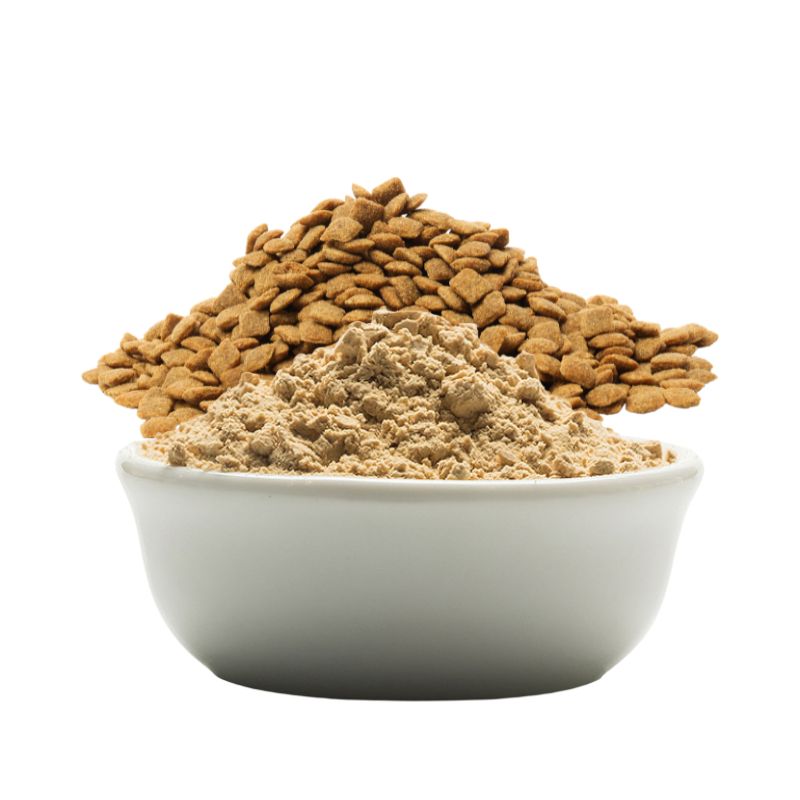
MYF-QT-01 and MYF-QT-02 are the palatant powder especially for dog feed. Their main raw materials are the same, the chicken liver, but there's difference among the proportion of ingredients, the reaction time and the processing technology. Therefore, MYF-QT-02 owns stronger aroma and darker colour and its palatability is better than MYF-QT-01. Besides, its additive amount is less than any other powder products, which can also help reduce stocking pressure.
For cats, we have two kinds of flavorings, ocean fish flavor and the mixed flavor(chicken&fish). Both of them have great performance and the same price.
YCF-MT-02 and YCF-MT-02P are the palatant powder especially for cat food. Compared to YCF-MT-02, YCF-MT-02P also includes krill as one of the main raw materials besides chicken liver and ocean fish. YCF-MT-02 is our most popular powder palatant among our clients due to its satisfactory effect on cats. YCF-MT-02P is the best powder palatant for cats and its price is only a little higher than YCF-MT-02.
Yes. YCF-P01 is our basic product, which could be used for both cats and dogs. It works well but not as amazing as other powder products. You can try this one if you want to lower the production cost.
- About shelf life
The shelf life of liquid products is 6 months while the shelf life of powder products is 12 months. And you need to use the liquid palatant within 1 week and use the powder palatant within 1 month and keep them sealed when store them.
- About storage
You need to store the products at a cool, dry and ventilated place.
- About application
We don't recommend you to do in that way because it doesn't maximize the effect.
You could use liquid palatant alone, but it is not recommended to use powder palatant alone. The order in which fat and palatants are applied directly affects palatant accessibility and performance. The goal is to ensure that palatants do not become encapsulated in the fat.
For best results, you could apply the fat, the liquid palatant and the powder palatant sequentially.
You had better allow sufficient time for each component to bond thoroughly to the kibble before applying the next.
For liquid palatant, the recommended dosage is 4-6% while the recommended dosage of powder palatant is 1-2%. You could adjust the input rate according to the comprehensive conditions of the kibbles.
It depends on the quality of the raw materials you used. For example, one of our client is using 8% chicken oil, 6% liquid palatant, and 2% powder palatant to make dry cat food.
You can appropriately increase or decrease our products according to the final use effect. Generally, great performance can be achieved within the recommended dosage.
You just need to keep the humidity of the finished product at about 6%.
To reach your palatability target without going over budget, you need a precise dosage of fat, liquid palatant. Volumetric pumps have proven to be more accurate to dose fat and liquid palatants.
For powder application, loss-in-weight feeders are the best solution to deliver a consistent amount.
Mix kibbles for at least 45 to 60 seconds after each spreading sequence to ensure optimized exchange of ingredients.
You can test the palatants on a monadic (or single-bowl) testing methods. Or you can test with a two-bowl testing methods to compare with other palatants of other brands or the kibbles without any coating.
- About packaging&payment&lead time
Our regular packaging for liquid palatant is a double layer PE bag with a spout and the outside packaging is a little plastic bucket. It is 20 KG per bucket. However, in order to avoid damages during the transportation, we recommend the IBC tanks(the volume of 500L or 1000L) to pack the liquid products if you can use them up within 1 week.
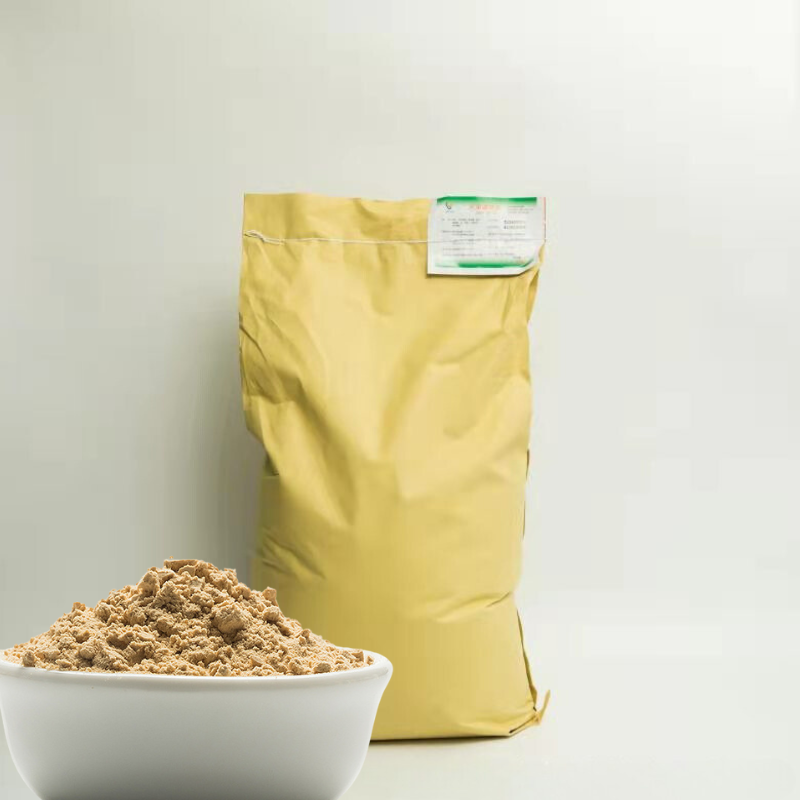
In order to avoid powder’s clumping due to pressure between the packaging, we use double PE bags to pack the powder products first and the outside packaging is a carton. In order to facilitate moving, powder product is 10 KG per carton.
With regard to the payment terms, we usually take ' T/T 30% before production, T/T 70% before documents sent '. Also, we accept 100% l/c at sight. However, if you have special needs, we can have a further negotiation on it based on the order quantity.
Around 25 days. If you have an urgent order, we can try to adjust the production schedule for you.
YCF-MT-02 and YCF-MT-02P are the palatant powder especially for cat food. Compared to YCF-MT-02, YCF-MT-02P also includes krill as one of the main raw materials besides chicken liver and ocean fish. YCF-MT-02 is our most popular powder palatant among our clients due to its satisfactory effect on cats. YCF-MT-02P is the best powder palatant for cats and its price is only a little higher than YCF-MT-02.
Yes. YCF-P01 is our basic product, which could be used for both cats and dogs. It works well but not as amazing as other powder products. You can try this one if you want to lower the production cost.
Latest Blog
Read Our Latest Blog
Palatant for Kibble Coating: Why Surface Flavor Technology Is Transforming Modern Pet Food
Palatant for Kibble Coating: The Technology Behind Better Pet Food Acceptance Walk through the pet food aisle...
Extrusion Coating Palatant: The Hidden Technology Behind Better Pet Food Acceptance
Extrusion Coating Palatant: Why Modern Pet Food Brands Depend on It Walk into any premium pet store...
How Pet Food Manufacturers Improve Palatability in 2027
Palatability Pet owners often assume pets refuse food because they are picky. But inside the pet food...
Why Cats Refuse Food Suddenly: Causes, Risks, and How Pet Food Brands Can Improve Palatability
Why Cats Refuse Food Suddenly Cats are famous for being selective eaters. One day they clean the...
Pet Food Palatants: The Science Behind Better Pet Food Palatability in 2026
Pet Food Palatants Why Pet Food Palatants Matter More Than Ever Walk into any premium pet store...
Hydrolyzed Chicken Liver Palatant: Why Pet Food Manufacturers Are Using It to Improve Palatability
Hydrolyzed Chicken Liver Palatant In today’s competitive pet food industry, nutrition alone is no longer enough. Pet...
Pet Food Flavour Coating System: How Modern Palatability Technology Improves Pet Food Acceptance
Pet Food Flavour Coating System The global pet food industry is becoming more competitive every year. Pet...
Why Dog Food Is Not Palatable: The Hidden Reasons Dogs Reject Certain Formulas
Why Dog Food Is Not Palatable A dog walking away from its food bowl is one of...
Poultry Digest for Pet Food: Why It Matters in Modern Pet Food Formulation
Poultry Digest for Pet Food: The Science Behind Better Palatability Pet owners today are paying closer attention...
Pet Food Flavor Coating Process: How Great Kibble Becomes Irresistible
Pet Food Flavor Coating Process If nutrition gets a pet food product onto the shelf, flavor gets...
Animal Protein Digest: The Science Behind Better Pet Food Palatability and Performance
Animal Protein Digest If you’ve ever wondered why some pet foods are instantly devoured while others sit...
How to Improve Pet Food Palatability
How to Improve Pet Food Palatability Pet food can be perfectly balanced on paper and still fail...