Chicken Flavour for Dog Food: Choosing the Right Palatant for Your Formula
Choosing chicken flavour for dog food involves more than finding an ingredient with an appealing smell. For pet food manufacturers, the right flavour system needs to complement the recipe, work with the production process and deliver consistent feeding acceptance at a commercially sensible cost.
Chicken-based palatants offer a practical starting point for developing dry dog food, wet food and treats. However, performance depends on the finished product. A palatant that works well on one kibble may produce different results in another formulation.
Understanding the available formats, application requirements and testing methods helps manufacturers make better sourcing decisions. This guide explains what to consider when selecting chicken flavour for dog food and how to prepare a useful brief for your supplier.
What Is Chicken Flavour for Dog Food?
In commercial pet food manufacturing, chicken flavour refers to a flavour system intended to contribute chicken-like sensory characteristics to the finished food. A palatant is selected to improve the food’s appeal to the animal.
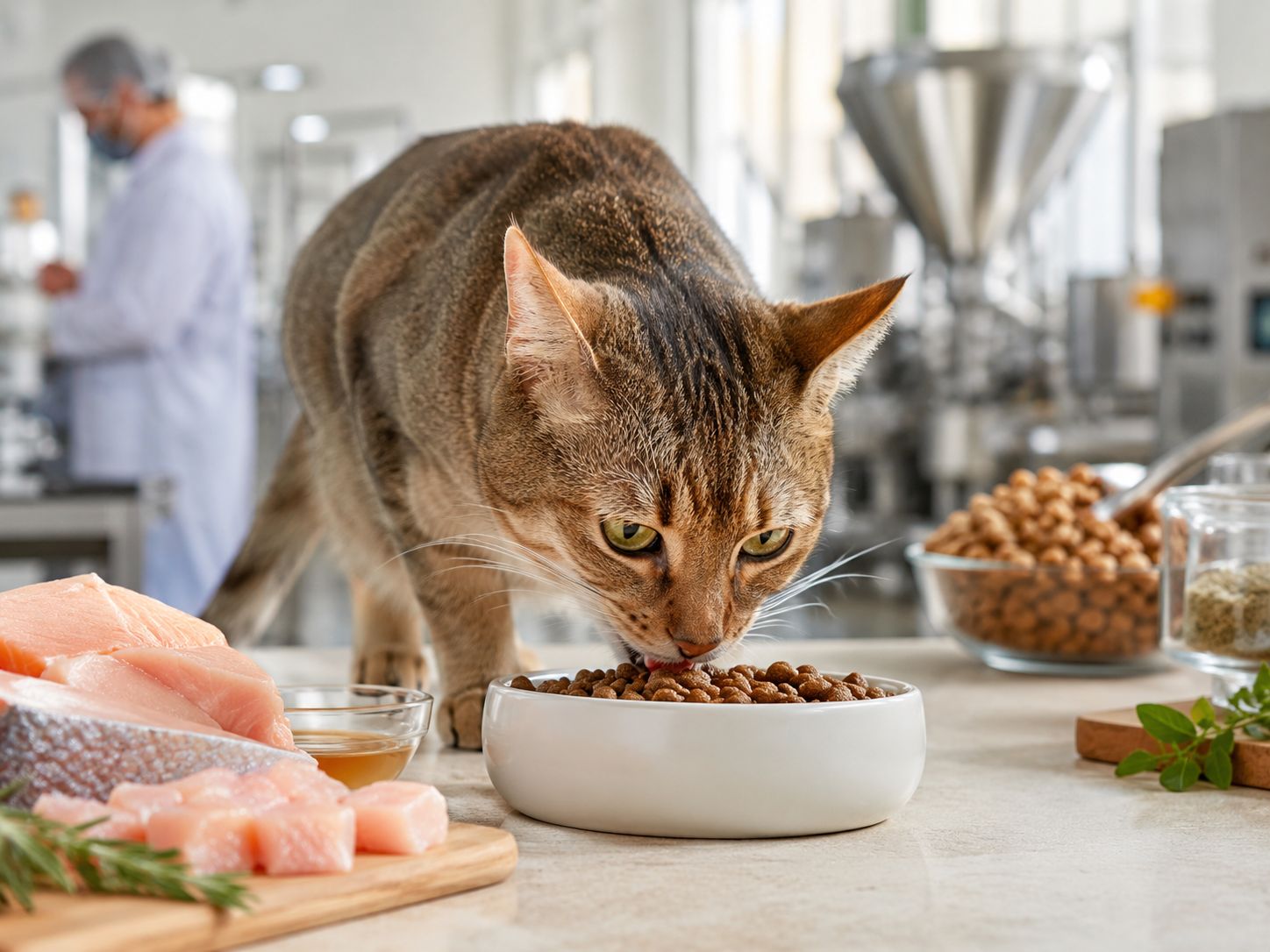
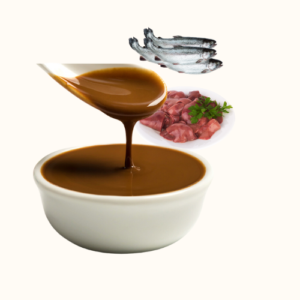
Depending on the formulation, a chicken-based palatant may contain chicken liver, hydrolysed chicken proteins and other flavour components.
Chicken meat, chicken fat and chicken palatants serve different purposes:
| Ingredient | Main role in a formulation |
|---|---|
| Chicken meat | Contributes protein and other nutrients as part of the base recipe |
| Chicken fat | Contributes fat, energy and sensory characteristics |
| Chicken liver powder | Provides a liver-derived ingredient whose properties depend on its processing and composition |
| Chicken-based palatant | Provides a formulated system intended to improve palatability |
These ingredients should not be treated as interchangeable purchasing specifications.
A product described as “chicken flavour” may also contain other protein sources, carriers or supporting ingredients. Always review the complete composition against your formulation requirements.
Why Consider Chicken-Based Palatants?
Chicken is a useful flavour direction for manufacturers developing poultry recipes or reviewing an existing palatability system.
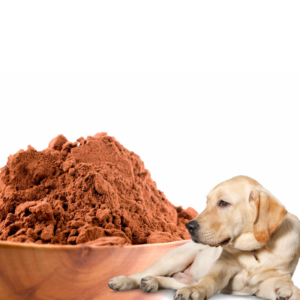
Profypet’s dog food palatant range includes chicken-liver-based powders, while its pet food palatant solutions cover powder and liquid formats for different applications.
For a product development team, the most useful question is specific: can a candidate improve acceptance of your food under your processing conditions?
A chicken palatant trial may help manufacturers evaluate:
- A new dry dog food formulation.
- A recipe change involving different raw materials.
- An alternative to an existing palatant.
- A different application level.
- A flavour system for a new treat or wet food product.
Set the development objective before requesting samples. This makes it easier to select appropriate candidates and compare the results.
Ingredient freshness, texture and production consistency also deserve attention. Palatant development should begin with a sound base product.
Powder or Liquid Chicken Palatant: Which Should You Choose?
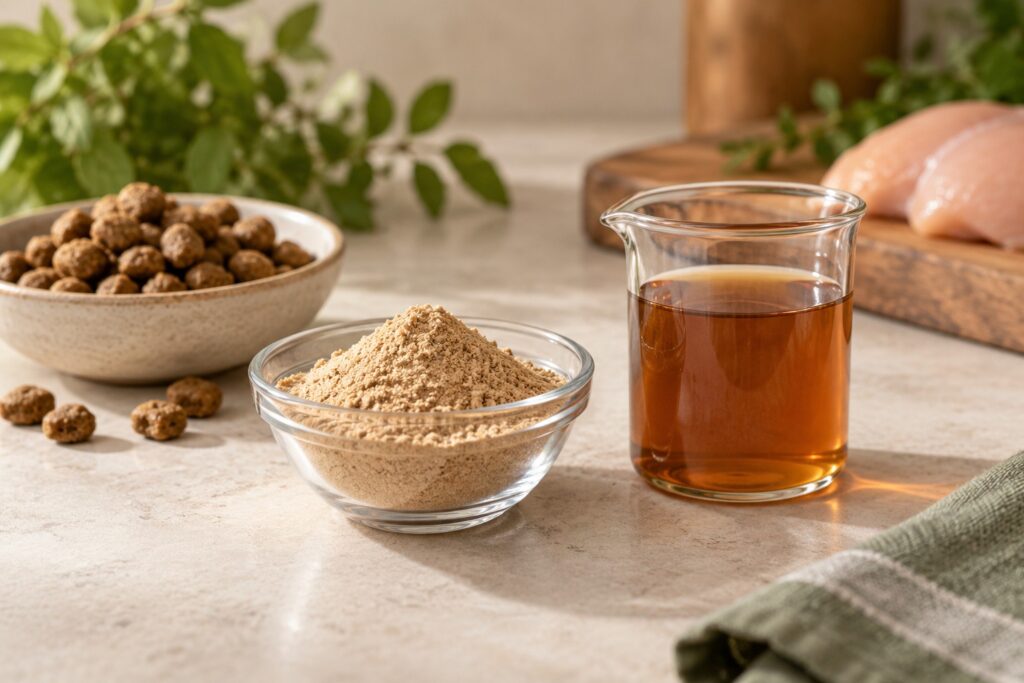
Both powder and liquid palatants can be considered for dog food applications. The right choice depends on the food format, available equipment and handling requirements.
Neither format should be assumed to perform better in every recipe.
Powder Chicken Palatants
Powder formats can be evaluated for surface application on kibble or incorporation into suitable blends.
During a production trial, assess:
- Flow through the dosing equipment.
- Accuracy of addition.
- Distribution across the batch.
- Adhesion to the food surface.
- Dust and material losses.
- Handling during storage and production.
A powder that looks suitable in a sample container still needs to perform consistently on the manufacturing line.
Liquid Chicken Palatants
Liquid formats can be evaluated for spray coating or incorporation into a compatible food matrix.
Important trial considerations include:
- Viscosity at the application temperature.
- Pumpability.
- Spray coverage.
- Compatibility with the dosing equipment.
- Moisture contribution to the finished food.
- Storage and handling instructions.
Combined Powder and Liquid Systems
Where equipment supports both formats, manufacturers may also evaluate a combined system.
The decision should be based on measurable results. Compare any additional handling, production complexity and ingredient cost against the benefit demonstrated in the finished product.
| Format | Possible application | Main points to check |
|---|---|---|
| Powder | Kibble coating or suitable dry blends | Flow, adhesion, distribution and dust |
| Liquid | Spray coating or compatible food mixtures | Viscosity, coverage and moisture contribution |
| Combined system | Layered application | Sequence, process consistency and additional benefit |
How to Apply Chicken Flavour to Dry Dog Food
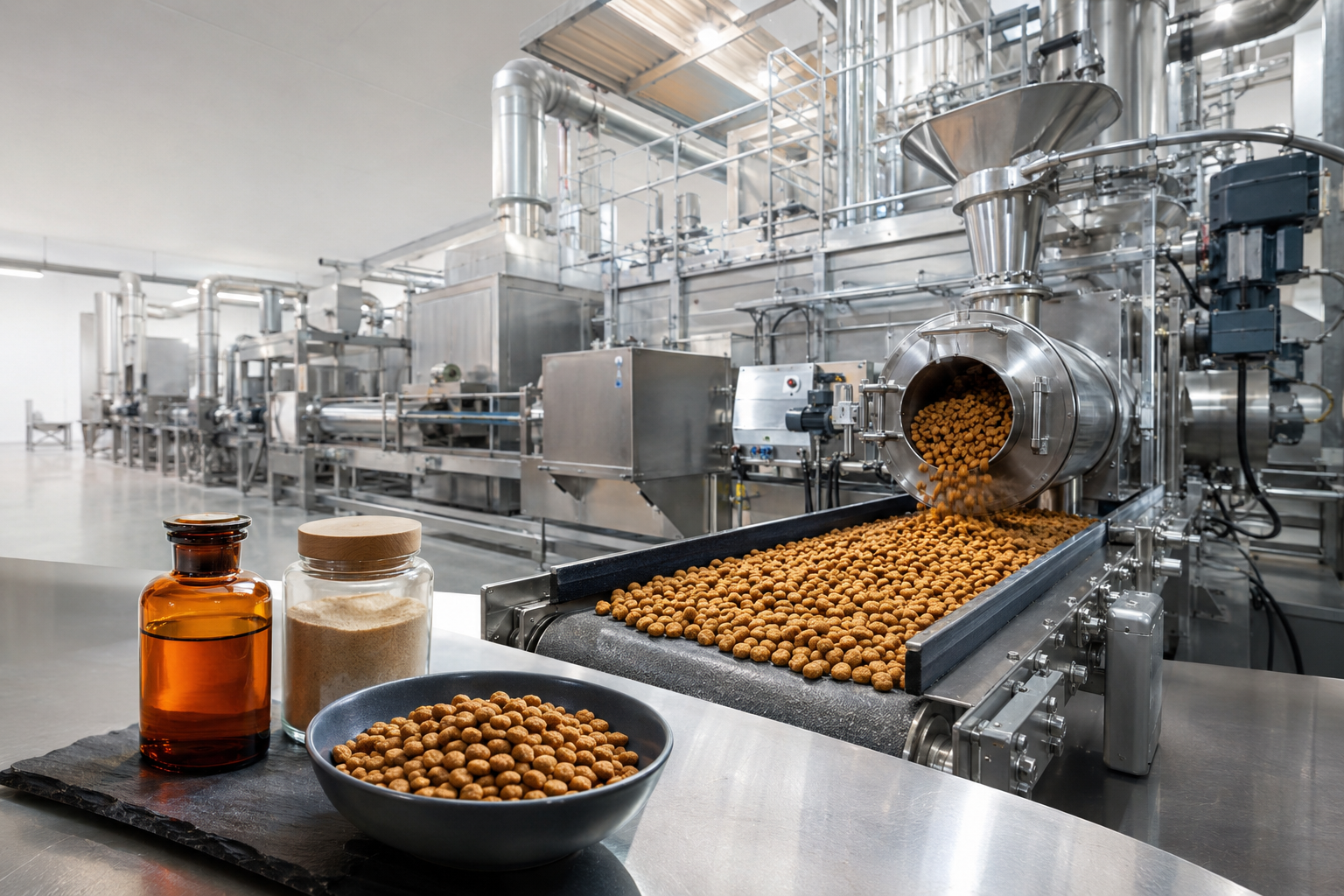
For dry kibble, surface application is a common way to deliver palatants.
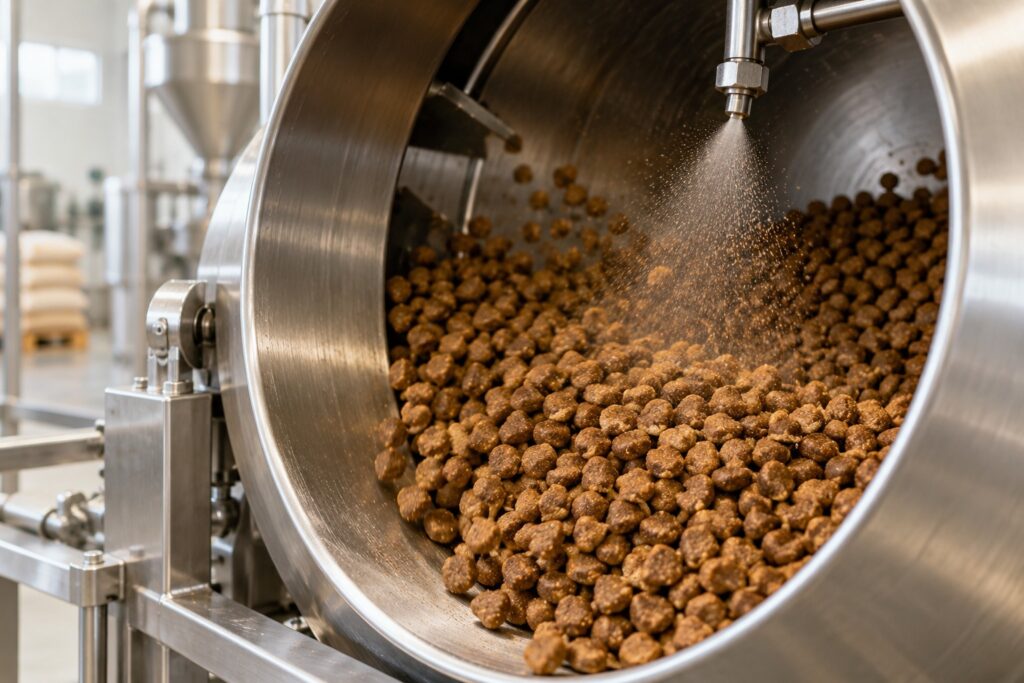
When a coating system uses fat, liquid palatant and powder, a typical sequence is:
- Apply the fat.
- Apply the liquid palatant.
- Apply the powder palatant.
The final operating conditions depend on the formulation and equipment. This sequence is described in AFB International’s palatability application guidance.
Record the Conditions That Matter
A useful pilot trial should document more than the ingredient name and addition rate.
Record the actual addition weights, kibble condition, application temperature, mixing time and spray settings. Check samples from different parts of the batch to assess coverage and consistency.
These records make successful trials easier to reproduce during larger production runs.
Validate the Inclusion Rate
There is no universal addition rate for every chicken-flavoured powder, liquid and finished recipe.
Start with the supplier’s recommendation for the exact grade under review. Then compare a controlled range of inclusion levels while keeping other variables consistent.
The goal is to identify an application level that meets the agreed palatability target at an acceptable cost.
Using Chicken Flavour in Wet Dog Food and Treats
A palatant selected for dry kibble should not automatically be carried over to wet food or treats without further evaluation.
Wet Dog Food
Wet food palatants may experience heat during production. Thermal processing can change their composition, aroma and performance.
Assess the finished, processed food rather than relying on the smell or appearance of the mixture before processing. AFB International’s research on thermal processing explains why this distinction matters.
When requesting samples, tell the supplier whether the product is a pâté, chunks in gravy or another format, and describe the intended processing conditions.
Dog Treats
A baked biscuit, soft chew and coated training treat present different development requirements.
Include the following details in your brief:
- Treat format and target texture.
- Main ingredients.
- Mixing and processing method.
- Intended point of palatant addition.
- Packaging and storage conditions.
This information helps narrow the sample selection to candidates suited to the actual product.
How to Test Chicken Flavour for Dog Food
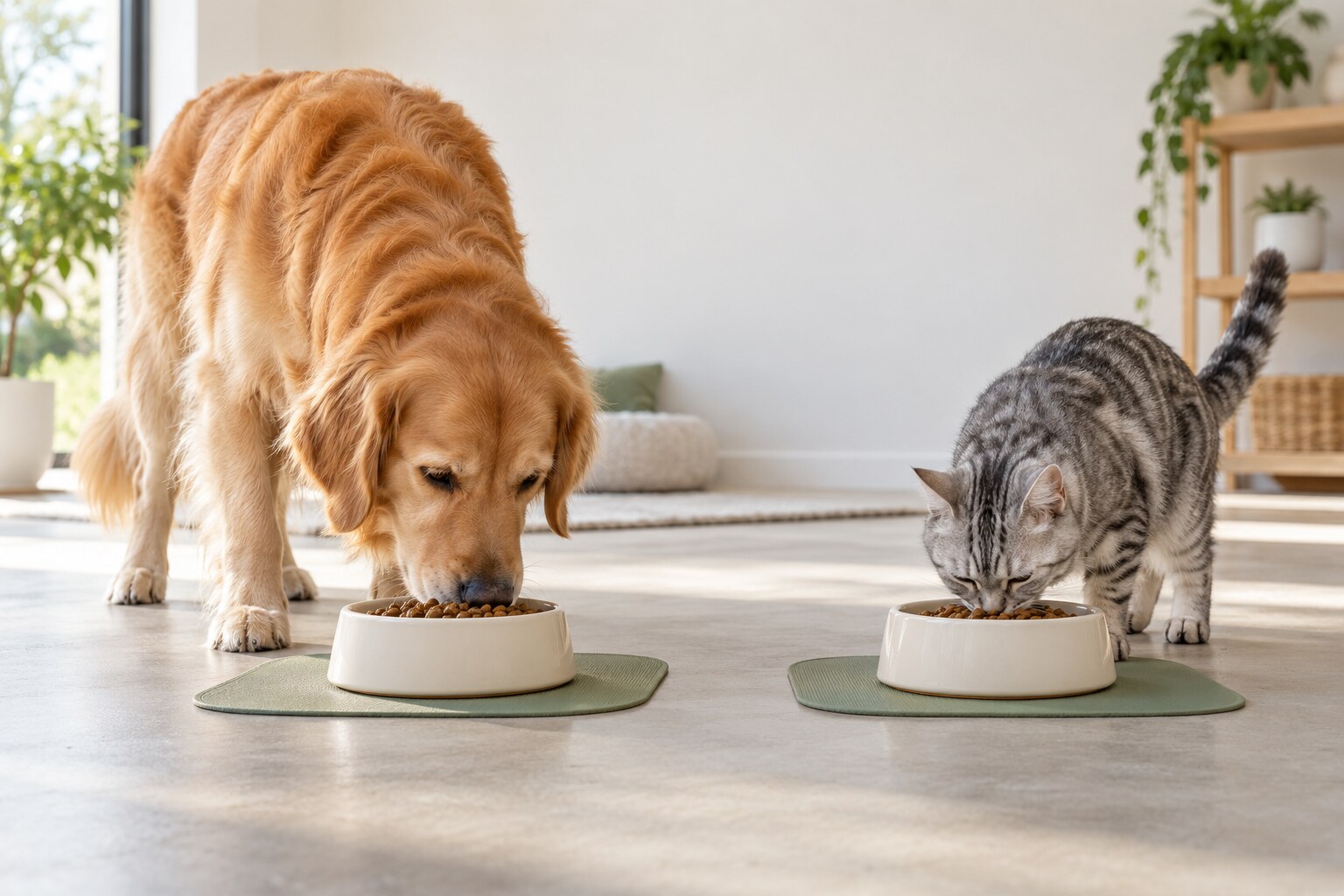
A strong aroma to a person does not establish preference in dogs. Select palatants using feeding assessments of the finished food.
Define Success Before the Trial
Decide whether you want to compare the candidate with your existing recipe, an alternative palatant or another agreed benchmark.
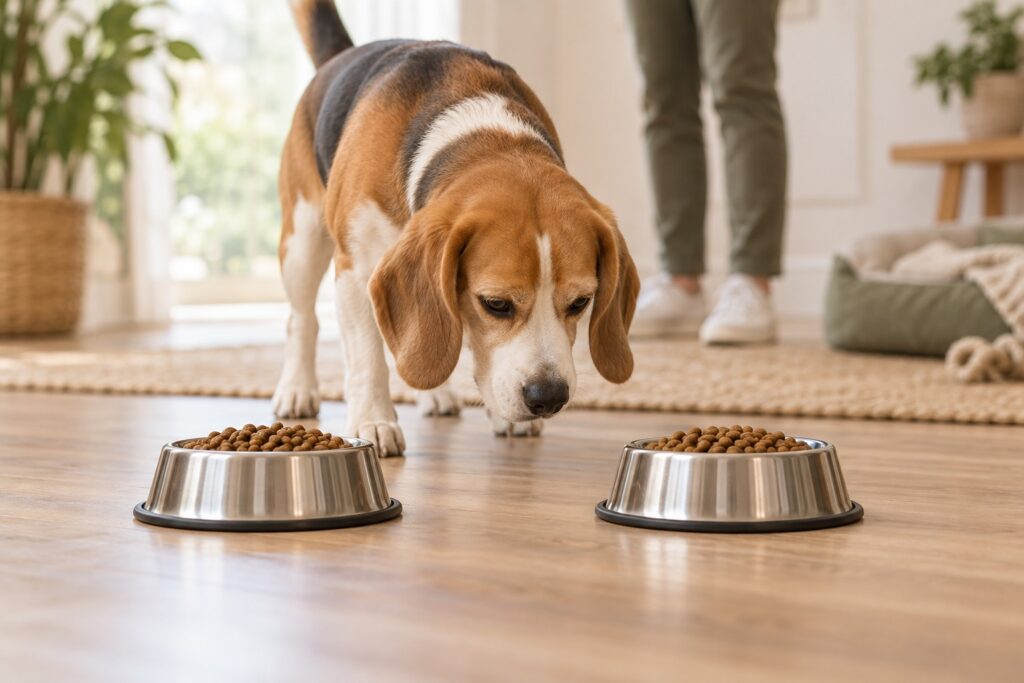
A controlled two-bowl test can assess preference between two foods. However, the measures describe different behaviours:
- First approach: which bowl the dog approaches first.
- First choice: which food the dog begins eating first.
- Intake ratio: the amount of one food consumed relative to the total consumption of both foods.
Approaching a bowl first does not necessarily mean the dog will eat more from it. AFB International’s overview of palatability testing explains these distinctions.
Agree a Consistent Protocol
Work with the testing provider to agree the number of dogs, test duration, bowl-position controls and analysis.
Keep variables unrelated to the palatant as consistent as possible. Review individual responses as well as the overall result, and avoid treating a single favourable observation as proof of a general preference.
Include Stored Product Samples
Consider a later assessment of retained finished-food samples.
This helps establish whether the initial result remains relevant after storage, rather than only immediately after production.
Compare Cost in the Finished Food
The lowest price per kilogram does not always produce the lowest ingredient cost per tonne of finished dog food.
Compare each option at its proposed inclusion rate.
For example:
| Hypothetical option | Palatant price | Inclusion rate | Palatant cost per tonne of finished food |
|---|---|---|---|
| Option A | £3.00/kg | 1.0% | £30.00 |
| Option B | £2.50/kg | 1.5% | £37.50 |
These figures are illustrative, not Profypet quotations, and do not imply equal performance.
Alongside ingredient cost, review application losses, handling requirements and the feeding-test outcome.
The meaningful comparison is the cost of achieving an agreed result in your formulation.
What to Ask a Chicken Palatant Supplier
A clear technical and commercial brief makes supplier discussions more productive.
Before selecting chicken flavour for dog food, request information covering:
Product Composition
Ask for the full ingredient composition, declared animal species and specification for the exact grade being considered.
Check that the complete blend fits the intended recipe.
Application Guidance
Request the recommended inclusion range, application method and handling conditions.
Confirm whether the supplier’s guidance relates to dry kibble, wet food, treats or another application.
Quality Documentation
Ask for a batch certificate of analysis, agreed quality limits and traceability information.
Documents should relate to the product you intend to purchase, rather than only describing the supplier’s broader range.
Storage and Supply
Confirm:
- Shelf life and storage conditions.
- Packaging format.
- Sample availability.
- Minimum order quantity.
- Production lead time.
- Quotation basis.
- Supporting information needed for the destination market.
Providing your estimated purchasing volume and production requirements helps the supplier prepare a more relevant response.
Frequently Asked Questions
Is chicken flavour the same as chicken liver powder?
No. Chicken flavour describes a sensory direction, while chicken liver powder identifies an ingredient type. A finished chicken palatant may contain several components. Review the specification to understand what is supplied.
How much chicken palatant should be added to dog food?
Use the recommended range for the specific product as a starting point. Validate the level in your own recipe and manufacturing process before scaling up.
Does a stronger smell mean better palatability?
A stronger smell to a person does not establish canine preference. Feeding assessments of the finished food provide a more relevant basis for selection.
Can one chicken palatant work across several products?
It may be possible, but each application should be evaluated separately. Differences in the base recipe, texture and processing conditions can affect the result.
What information should manufacturers provide when requesting samples?
Include the food format, main protein sources, production method, current palatant system, target market and development objective. An estimated order volume and target cost also help focus the discussion.
Discuss Your Chicken Flavour Requirements with Profypet
Developing a new dog food or reviewing an existing formulation?
Explore Profypet’s pet food palatant solutions and share your product requirements with our team.
Tell us about your food format, base recipe, coating or processing method, target market and estimated purchasing volume. If you have an existing benchmark, include the result you want to achieve.
Contact Profypet to discuss suitable chicken-based palatants, request product specifications and check sample availability for your next formulation trial.