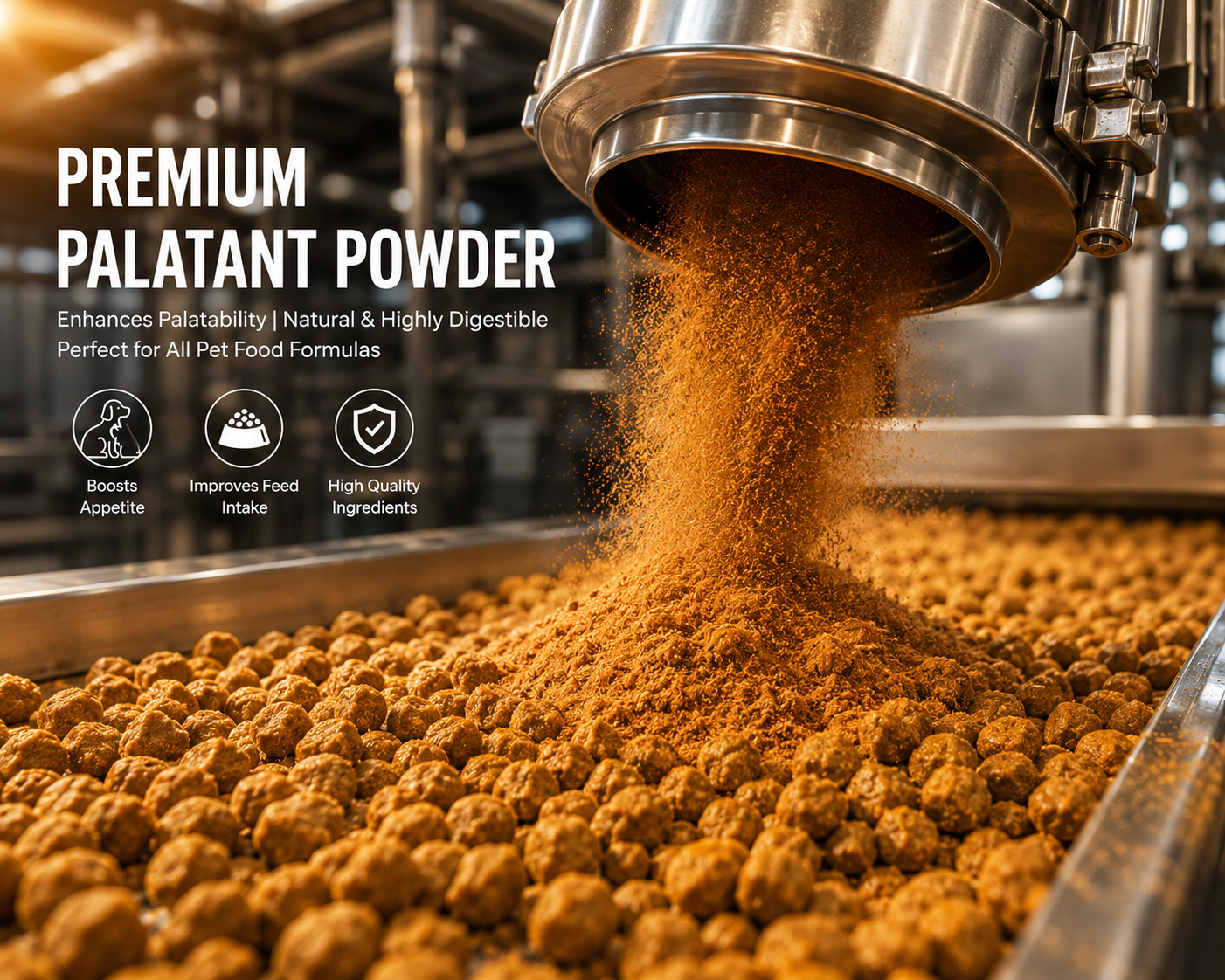
Pet Food Coating Solution: The Technology Behind Better Pet Food Acceptance
In today’s highly competitive pet food market, nutrition alone is no longer enough.
Pet owners expect more.
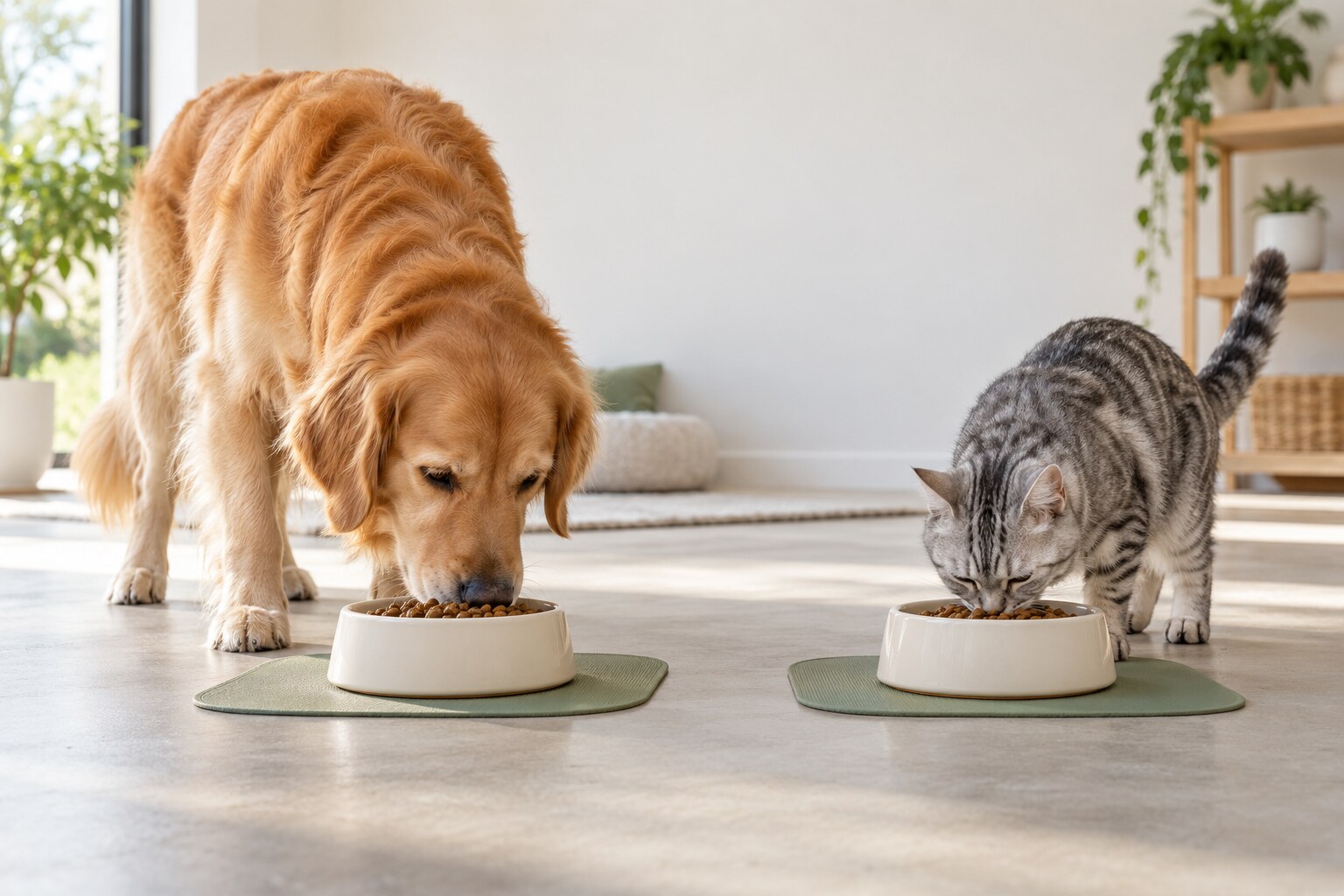
They want pet food that smells fresher, tastes better, looks more premium, and creates visible excitement during feeding.
For pet food manufacturers, this creates a major challenge:
How do you consistently produce kibble that pets genuinely enjoy eating?
The answer increasingly comes down to one critical processing technology:
Pet food coating solutions.
Modern coating systems are no longer just simple oil sprayers attached to production lines. They have evolved into advanced engineering systems designed to improve:
- Pet food palatability
- Aroma intensity
- Flavor adhesion
- Surface consistency
- Nutritional application
- Fat distribution
- Shelf-life stability
- Feeding acceptance
Today, leading pet food brands use specialized coating technologies to create products that stand out in crowded retail markets.
From premium cat kibble to functional veterinary diets, coating systems now play a direct role in product success.
For B2B buyers, understanding pet food coating solutions is becoming increasingly important for improving repeat purchases, reducing feeding complaints, and building stronger product differentiation.
What Is a Pet Food Coating Solution?
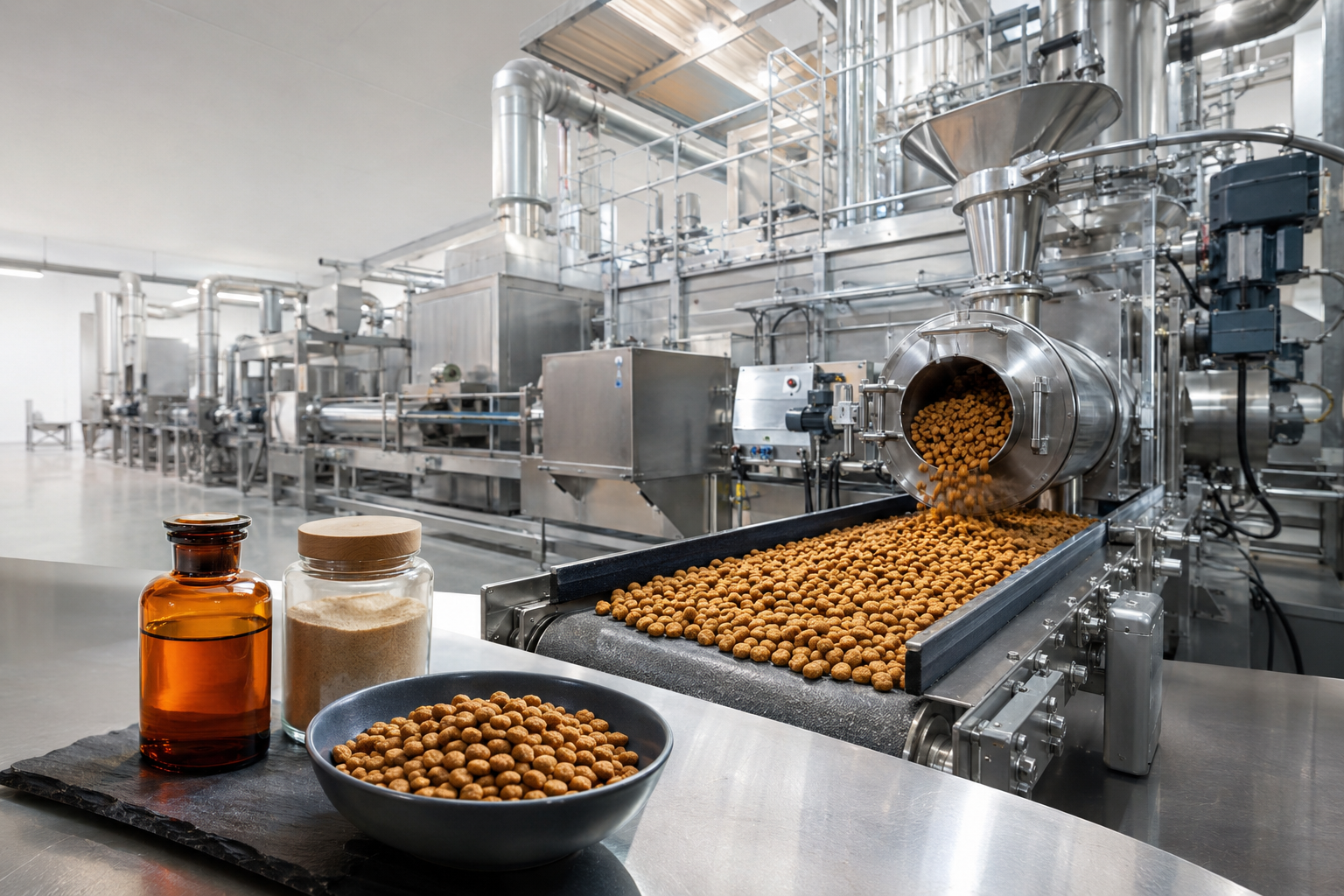
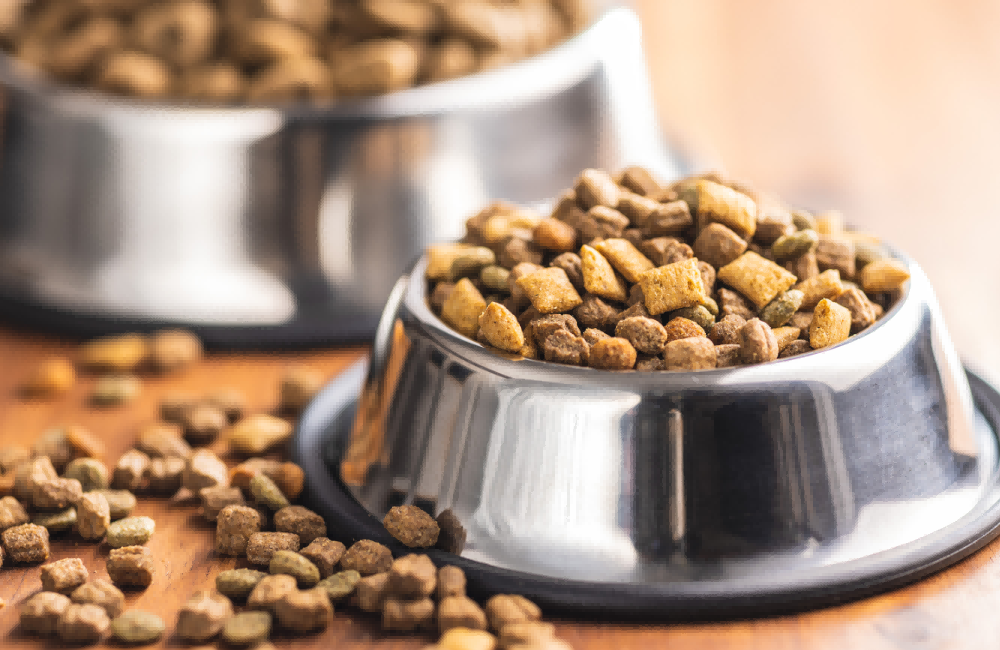
A pet food coating solution refers to the equipment, process, and ingredient system used to apply fats, oils, palatants, nutrients, and functional additives onto the surface of dry pet food.
The coating stage usually happens after extrusion and drying.
This timing is critical.
High-temperature extrusion processing can damage volatile aroma compounds and reduce flavor intensity.
By applying flavor systems afterward, manufacturers can preserve stronger aroma release and improve feeding performance.
Typical materials applied through coating systems include:
- Chicken fat
- Fish oil
- Duck fat
- Hydrolyzed liver powder
- Poultry digest
- Liquid palatants
- Vitamins
- Probiotics
- Functional nutrients
- Pet food palatability enhancers
The primary goal is simple:
Create highly attractive kibble with stable coating performance.
Why Coating Technology Matters More Than Ever
The global pet food industry continues shifting toward premiumization.
According to pet industry market reports, pet owners increasingly prioritize:
- Better ingredient quality
- Premium sensory experience
- Functional nutrition
- Cleaner labels
- Species-specific formulas
At the same time, pet owners are becoming more emotionally connected to feeding behavior.
Many consumers judge product quality based on how excited their pets appear during meals.
This is especially true for:
- Picky cats
- Small dog breeds
- Senior pets
- Veterinary diets
- Functional formulas
In real production environments, manufacturers often discover that even nutritionally balanced formulas may fail commercially if feeding enthusiasm is weak.
This is why pet food coating systems have become a strategic investment rather than a secondary processing step.
How Pet Food Coating Solutions Work
Step 1: Extrusion
Raw materials are mixed and cooked inside an extruder.
This creates kibble structure and texture.
However, extrusion temperatures can exceed 120°C–180°C, potentially reducing aroma intensity.
Step 2: Drying
Fresh kibble is dried to achieve safe moisture levels.
After drying, kibble typically contains limited surface flavor.
Step 3: Fat Application
Fats and oils are applied to improve:
- Mouthfeel
- Aroma carrying capacity
- Surface adhesion
- Palatant binding
Common fats include chicken fat, fish oil, and duck fat.
Step 4: Palatant Coating
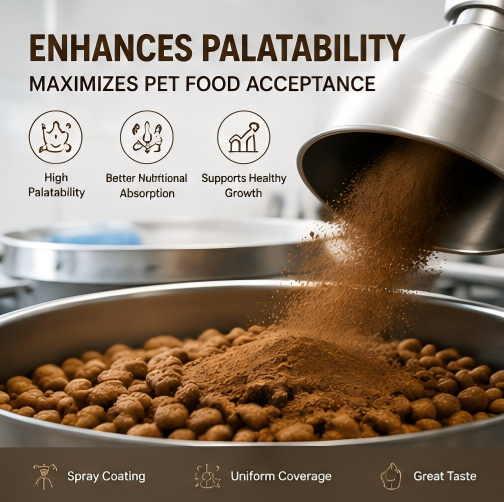
Liquid or powdered flavor systems are applied evenly onto kibble surfaces.
This stage significantly influences:
- Aroma release
- Feeding response
- Flavor consistency
- Product differentiation
Step 5: Cooling and Packaging
The coated kibble is cooled before packaging.
Proper cooling helps maintain flavor stability and reduce oxidation risks.
Types of Pet Food Coating Solutions
Different manufacturers use different coating technologies depending on production scale, budget, and product positioning.
Drum Coating Systems
Traditional drum coaters rotate kibble while spraying oils and palatants.
Advantages include:
- Lower investment cost
- Easy operation
- Flexible production
- Good performance for standard formulas
However, uneven coating and surface dusting can sometimes occur.
Vacuum Coating Systems
Vacuum coating systems use negative pressure to pull oils and palatants deeper into kibble pores.
This technology has become increasingly popular in premium pet food manufacturing.
Advantages of Vacuum Coating
- Better flavor retention
- More uniform coating
- Higher oil loading capacity
- Reduced surface greasiness
- Improved feeding consistency
- Better shelf stability
Many ultra-premium pet food brands now rely heavily on vacuum coating systems.
Spray Coating Systems
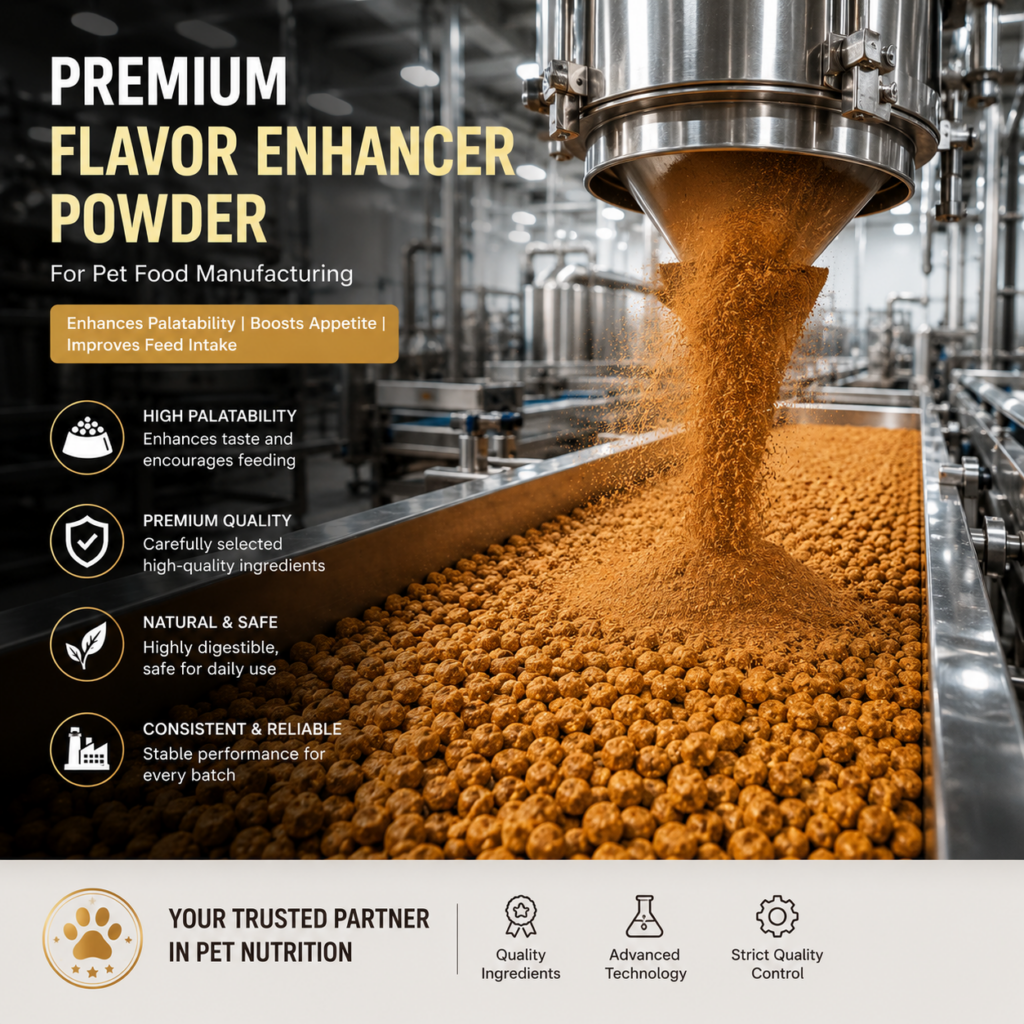
Spray systems allow highly controlled liquid application.
These systems are often integrated into automated production lines.
Multi-Stage Coating Systems
Some manufacturers use multiple coating stages to apply:
- Fats
- Powder palatants
- Functional nutrients
- Heat-sensitive ingredients
This approach helps optimize ingredient stability and flavor layering.
Why Coating Solutions Are Critical for Cat Food
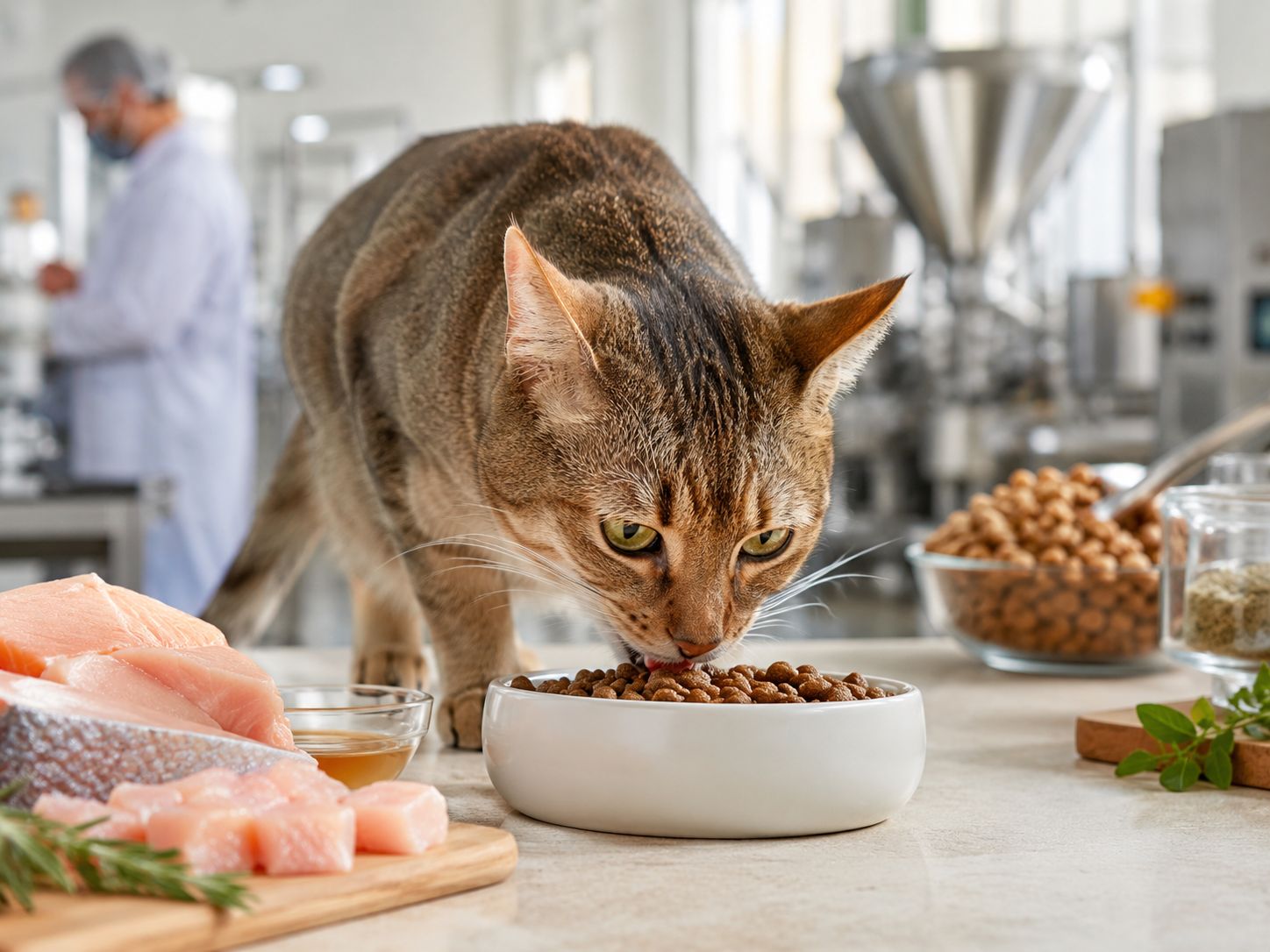
Cats are highly sensitive to aroma.
Unlike humans, cats rely heavily on smell when selecting food.
Even small changes in coating quality can affect feeding acceptance.
In practical production environments, manufacturers frequently report that inconsistent coating performance may lead to:
- Reduced feed intake
- Formula rejection
- Lower repeat purchases
- Increased customer complaints
This makes coating technology especially important in:
- Kitten food
- Senior cat food
- Hairball formulas
- Veterinary diets
- Functional nutrition products
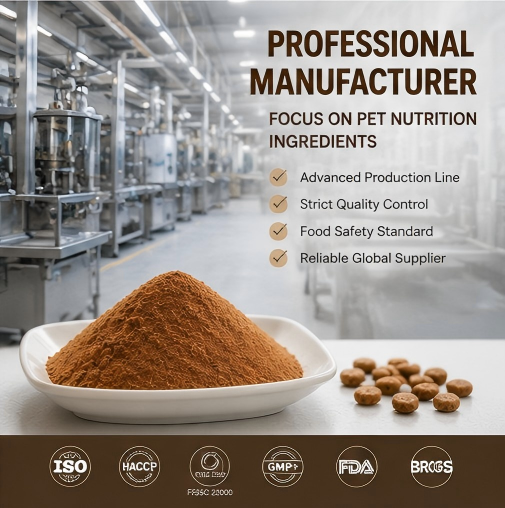
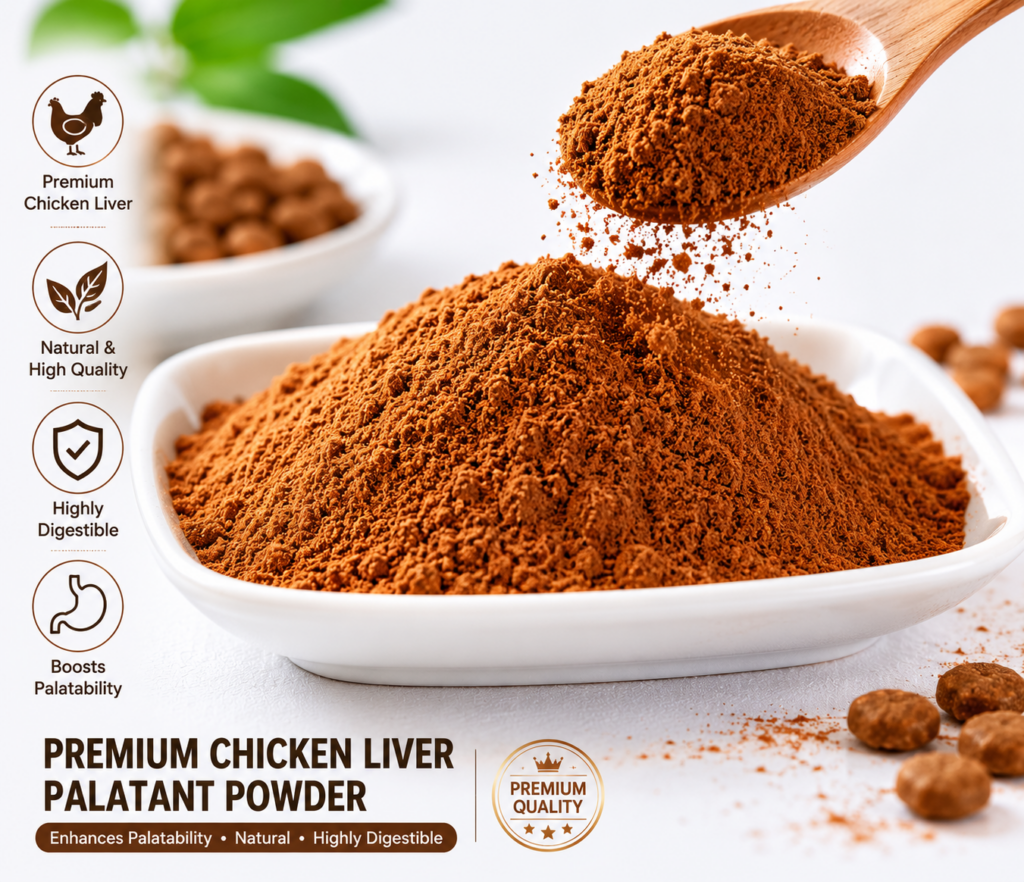
Hydrolyzed liver palatants remain one of the most widely used coating ingredients because they provide:
- Strong meaty aroma
- Excellent feline acceptance
- Stable processing compatibility
- High amino acid content
Common Problems in Pet Food Coating Systems
Even advanced factories encounter coating challenges.
Uneven Flavor Distribution
Poor mixing may create inconsistent feeding response.
Excessive Oil Leakage
Improper fat application can damage packaging appearance and reduce shelf stability.
Surface Dusting
Weak adhesion may cause powdered palatants to separate during transportation.
Oxidation Issues
Low-quality fats can negatively affect aroma and shelf life.
Flavor Loss During Storage
Volatile compounds may degrade over time without proper stabilization.
Reduced Palatability Over Time
Poor coating consistency may reduce long-term feeding enthusiasm.
These problems explain why experienced coating solution providers are highly valuable for commercial pet food production.
Key Factors That Affect Coating Performance
Successful coating performance depends on multiple interacting variables.
Kibble Porosity
More porous kibble structures generally absorb coatings better.
Fat Quality
Fresh stabilized fats improve aroma and oxidation resistance.
Particle Size Distribution
Fine powder distribution improves adhesion consistency.
Coating Temperature
Excessive temperatures may damage aroma compounds.
Equipment Design
Different coating systems create different distribution patterns.
Production Speed
High-speed lines require optimized application control.
Packaging Conditions
Oxygen exposure may reduce flavor stability over time.
Current Trends in Pet Food Coating Solutions
The pet food industry continues evolving rapidly.
Several major trends are influencing coating technology development.
Clean Label Coating Systems
Consumers increasingly prefer recognizable ingredients.
Manufacturers are developing:
- Natural palatants
- Cleaner hydrolysates
- Simplified formulations
- Reduced artificial additives
Functional Coating Ingredients
Modern coating systems increasingly include:
- Probiotics
- Omega fatty acids
- Digestive support ingredients
- Immune-support nutrients
Species-Specific Flavor Systems
Dog and cat flavor preferences differ significantly.
Manufacturers now develop targeted palatant systems rather than universal formulas.
Improved Aroma Retention
Advanced encapsulation technologies help preserve volatile flavor compounds longer.
Sustainable Protein Sources
Some manufacturers are exploring:
- Fish by-product hydrolysates
- Sustainable poultry digest systems
- Alternative protein palatants
How to Choose the Right Pet Food Coating Solution Supplier
Choosing the right coating solution partner is both a technical and strategic decision.
Look for Technical Expertise
Experienced suppliers understand:
- Extrusion processing
- Coating application rates
- Fat systems
- Palatant compatibility
- Shelf-life stability
Evaluate Equipment Compatibility
Coating ingredients must work with your:
- Drum coater
- Vacuum coater
- Spray system
- Production capacity
Request Palatability Testing Data
Professional suppliers often conduct:
- Two-bowl preference tests
- Intake studies
- Aroma evaluations
- Stability testing
These tests help reduce commercial risks before product launches.
Verify Certifications
Reliable suppliers often maintain:
- BRC
- IFS
- ISO22000
- HACCP
Consider Long-Term Supply Stability
Consistent raw material sourcing is essential for stable production.
Why Pet Food Coating Solutions Will Continue Growing
The future of pet food manufacturing is becoming increasingly sensory-driven.
Today, many brands already meet basic nutritional standards.
The next competitive advantage comes from:
- Better feeding excitement
- Stronger aroma
- Premium sensory experience
- Improved repeat purchases
- Better differentiation
Pet food coating solutions directly support these goals.
As global competition intensifies, manufacturers that invest in advanced coating technologies are more likely to:
- Improve customer retention
- Strengthen premium positioning
- Reduce feeding complaints
- Increase product acceptance
This is especially important in premium cat food and functional pet nutrition categories.
Final Thoughts
Pet food coating solutions have become one of the most important technologies in modern dry pet food manufacturing.
From improving flavor adhesion to enhancing aroma release and feeding response, coating systems now play a direct role in commercial product success.
For pet food manufacturers, coating is no longer just a finishing step.
It is a strategic tool for improving palatability, product stability, and market competitiveness.
As consumer expectations continue rising worldwide, advanced pet food coating technologies will likely become even more important across:
- Premium dry kibble
- Veterinary diets
- Functional pet food
- High-protein formulas
- Cat-specific nutrition
- Freeze-dried hybrid products
Manufacturers seeking better feeding performance and stronger product differentiation increasingly rely on professional pet food palatants and coating solutions to remain competitive.
To learn more about customized pet food coating solutions, liquid palatants, hydrolyzed liver coating systems, and pet food palatability enhancers, visit:
Profypet provides B2B-oriented pet food palatant and coating support solutions for global pet food manufacturers, wholesalers, and OEM/ODM projects.
Frequently Asked Questions
What is a pet food coating solution?
A pet food coating solution is a system used to apply fats, oils, palatants, and functional ingredients onto the surface of dry pet food after extrusion.
Why are coating systems important in pet food manufacturing?
Coating systems improve aroma, flavor retention, feeding acceptance, and product consistency.
What is vacuum coating in pet food production?
Vacuum coating uses negative pressure to help oils and palatants penetrate deeper into kibble pores for improved flavor retention.
What ingredients are commonly used in pet food coating?
Common ingredients include chicken fat, fish oil, poultry digest, hydrolyzed liver powder, liquid palatants, vitamins, and probiotics.
Why are coating systems especially important for cat food?
Cats rely heavily on aroma when selecting food, making stable and attractive coating performance critical for feeding acceptance.