
How to Choose Pet Food Ingredients Suppliers: A 7-Step Sourcing Guide
Choosing the right pet food ingredients suppliers is not simply a purchasing decision. It directly affects product safety, nutritional performance, palatability, batch consistency, production efficiency, and the reputation of your brand.
The lowest quotation does not always create the lowest finished-product cost. A supplier with inconsistent specifications, weak documentation, delayed deliveries, or limited technical support can cause reformulation work, rejected batches, production downtime, and customer complaints.
This guide gives pet food manufacturers, private-label brands, importers, and product developers a practical seven-step process for comparing suppliers and building a more reliable ingredient supply chain.
Contents
- Define the ingredient and product requirements
- Shortlist suppliers with the right specialization
- Review quality, safety, and traceability documents
- Test samples in the actual pet food formula
- Compare commercial and supply capabilities
- Evaluate technical and formulation support
- Approve suppliers through a controlled pilot order
Why the Right Pet Food Ingredient Supplier Matters
Every ingredient affects more than its line-item cost. A protein source can influence digestibility and texture. A fat can affect oxidation risk and aroma. A fiber can change stool quality and processing behavior. A palatant can influence initial attraction, continued consumption, and the overall feeding experience.
Reliable suppliers help manufacturers achieve four important outcomes:
- Consistent finished-product specifications across batches
- Stable production with fewer material-related disruptions
- Complete documents for internal review and market compliance
- Faster formulation, sampling, and product-launch cycles
Supplier selection should therefore combine technical fit, food-safety controls, service capability, supply reliability, and total cost—not price alone.
Step 1: Define Your Ingredient and Product Requirements
Begin with the result you need from the finished product. Do not start by asking every supplier for a generic catalog and price list.
Define the target animal, life stage, product format, nutritional positioning, processing method, target market, expected shelf life, and cost range. A dry dog kibble, wet cat food, freeze-dried treat, dental chew, and nutritional supplement may require very different ingredient specifications.
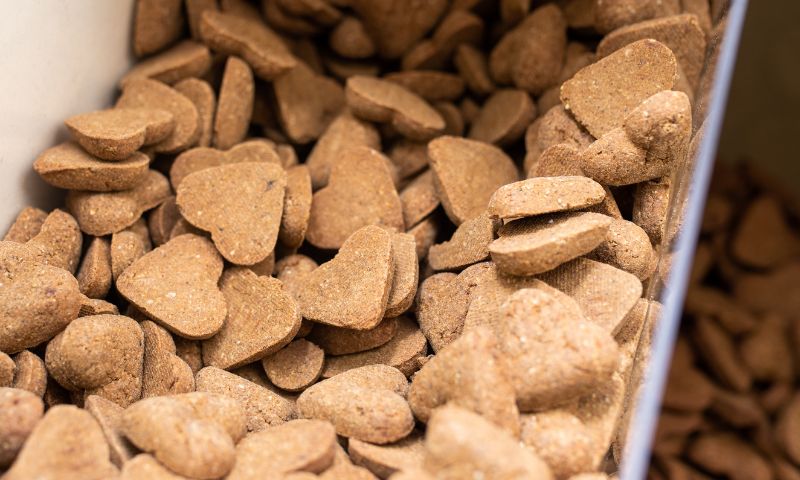
Main Pet Food Ingredient Categories
| Ingredient category | Typical function | Important evaluation points |
|---|---|---|
| Animal proteins and meals | Protein, amino acids, flavor, texture | Species, protein level, ash, digestibility, microbiological limits, batch variation |
| Fats and oils | Energy, fatty acids, aroma, coating | Fatty-acid profile, oxidation stability, peroxide limits, antioxidants, storage conditions |
| Grains, starches, and fibers | Structure, binding, energy, digestive support | Particle size, gelatinization behavior, fiber type, moisture, process compatibility |
| Vitamins and minerals | Nutritional completeness and targeted claims | Potency, bioavailability, carrier, overage, stability, premix uniformity |
| Functional ingredients | Joint, skin, digestive, dental, or other support | Active level, evidence, stability, interactions, permitted claims in the destination market |
| Palatants and flavor enhancers | Aroma, taste, acceptance, repeat consumption | Species preference, dry or liquid format, application rate, coating compatibility, palatability results |
Create a written specification before requesting quotations. At minimum, it should cover:
- Ingredient identity, source, and processing method
- Physical and sensory requirements
- Nutritional or active-component limits
- Microbiological and contaminant limits
- Allergen or GMO information when relevant
- Shelf life and storage requirements
- Packaging type and unit weight
- Acceptable batch-to-batch tolerances
- Required certificate of analysis format
A clear specification allows different offers to be compared on the same basis.
Step 2: Shortlist Suppliers with the Right Specialization
The best supplier is not necessarily the company with the largest catalog. It is the company with proven capability in the ingredient type, pet species, processing system, and market you serve.
For example, a general animal-feed ingredient trader may offer an attractive price but may not understand the tighter sensory consistency, documentation, and formulation support expected by premium pet food brands. Similarly, a supplier experienced in dog food may not have strong data for cat acceptance.
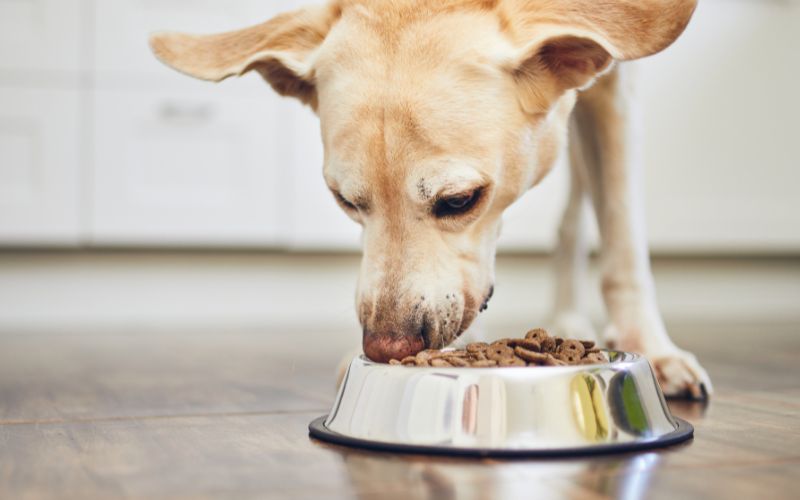
When researching pet food ingredient manufacturers, look for evidence of specialization:
- Dedicated pet food or pet treat applications
- Experience with products similar to yours
- Clear technical data sheets and sample procedures
- Quality systems appropriate to the ingredient and destination market
- Application laboratories or formulation support
- Export and logistics experience for your target region
- A defined change-control and customer-notification process
For critical materials, consider qualifying more than one source. A primary supplier may provide the best technical fit, while an approved backup supplier reduces the risk of shortages or shipping delays.
Step 3: Review Quality, Safety, and Traceability Documents
A professional supplier should be able to provide documents before a commercial order is placed. The exact file set depends on the ingredient and sales market, but the review normally includes:
- Product specification sheet
- Technical data sheet
- Recent certificate of analysis
- Safety data or handling information where applicable
- Ingredient composition and processing description
- Allergen statement
- Country-of-origin information
- Shelf-life and storage statement
- Packaging specification
- Relevant food-safety or quality certifications
- Traceability and recall procedures
- Change-notification policy
Certifications can support supplier screening, but a certificate alone does not guarantee that a particular ingredient will perform consistently in your formula. Confirm that the certification scope covers the manufacturing site and product category involved.
Traceability is equally important. Ask whether the supplier can connect each finished batch to raw-material lots, processing records, test results, and shipment records. Also confirm how quickly those records can be retrieved during a complaint or recall investigation.
Questions to Ask About Batch Consistency
- Which parameters are tested for every batch?
- What are the permitted specification tolerances?
- How are out-of-specification materials handled?
- Will the supplier notify you before changing raw materials, processing conditions, or production locations?
- Can the supplier provide data from several recent batches rather than one ideal sample?
This review helps separate a repeatable manufacturing system from a one-time good sample.
Step 4: Test Samples in the Actual Pet Food Formula
Never approve an ingredient only from a specification sheet. Test it under the same conditions used in your production process.
Start with a laboratory sample, then evaluate the ingredient in a controlled formula. Depending on the ingredient, testing may include:
- Appearance, aroma, color, and particle size
- Solubility, dispersion, or mixing behavior
- Extrusion, baking, retorting, drying, or coating compatibility
- Nutritional contribution and finished-product analysis
- Texture, density, moisture, or water-activity effects
- Oxidative and shelf-life stability
- Packaging compatibility
- Pet acceptance or palatability performance
Use an approved control formula and change only one variable when possible. This makes it easier to determine whether the new ingredient caused the result.
Special Considerations for Pet Food Palatant Suppliers
When comparing pet food palatant suppliers, evaluate more than aroma intensity. The correct palatant should match the target species, base formula, processing conditions, product positioning, and coating equipment.
For dry kibble, compare dry and liquid formats individually and in combination. In many coating systems, fat is applied before liquid and dry palatants, but the best sequence and application rate should be validated for the actual product. Record coating uniformity, production handling, initial attraction, intake, and repeat preference.
For cat food in particular, small formulation or process changes can alter acceptance. A supplier that can support structured one-bowl or two-bowl feeding trials may provide more value than one that only sends a standard sample.
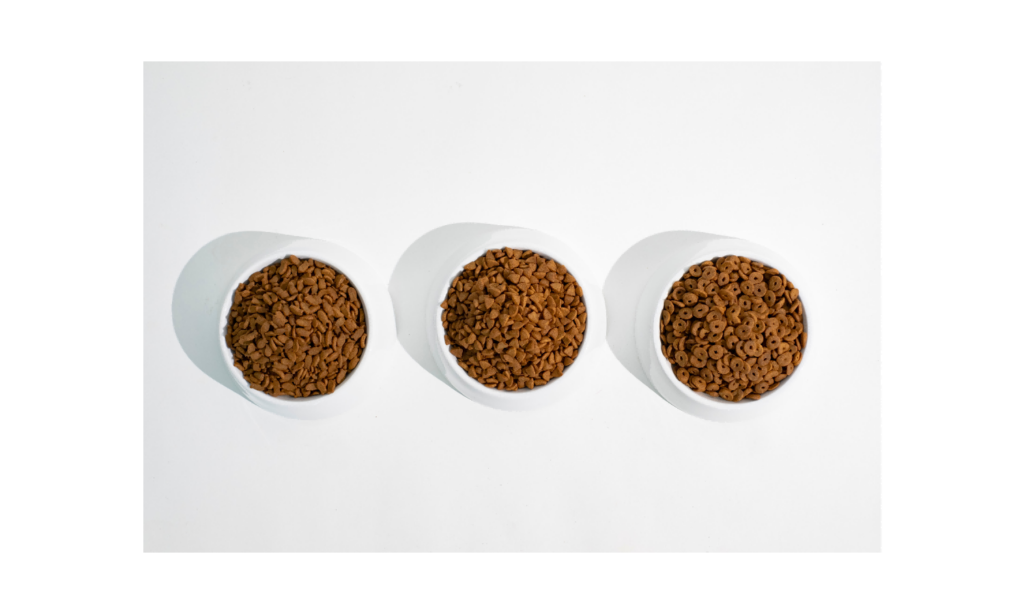
You can learn more about pet food palatants and review solutions developed specifically for cat food palatability.
Step 5: Compare Commercial and Supply Capabilities
Once technical suitability is confirmed, compare the complete commercial offer. Unit price is only one part of the decision.
Request the following information in the same format from each shortlisted supplier:
- Price and price-validity period
- Minimum order quantity
- Sample cost and lead time
- Standard production lead time
- Available packaging sizes
- Monthly or annual production capacity
- Incoterms and shipping options
- Payment terms
- Forecast requirements
- Safety-stock or reserved-capacity options
- Policy for urgent orders
Calculate the total landed and usable cost. A lower-priced powder may create more dust, require a higher application rate, or have greater batch variation. A more concentrated ingredient may have a higher price per kilogram but a lower cost in the finished formula.
Also assess supply risk. Ask where key raw materials come from, whether production depends on one facility, and what contingency plans exist for shortages, transport disruption, or sudden demand increases.
Step 6: Evaluate Technical and Formulation Support
Strong suppliers do more than deliver materials. They help customers use those materials correctly.
Technical support is particularly valuable when a manufacturer is developing a new product, reducing cost, changing a raw material, improving palatability, extending shelf life, or entering a new market.
Look for support such as:
- Recommended application ranges
- Formula and process troubleshooting
- Sample customization
- Compatibility guidance
- Feeding-trial or analytical support
- Scale-up recommendations
- Packaging and storage advice
- Fast responses from technical and commercial teams
Ask a supplier to explain why a proposed ingredient fits your product. A useful answer should connect ingredient characteristics to your formula and process. A generic answer focused only on price is a warning sign.
Communication quality should also be evaluated during the sample stage. Slow or incomplete responses before the order often predict greater difficulty after the order.
Step 7: Approve the Supplier Through a Controlled Pilot Order
After sample testing, place a pilot order before moving to full commercial volume. The goal is to confirm that normal production material matches the sample and that the supplier can execute the complete order process.
During the pilot, monitor:
- Product conformity against the agreed specification
- Certificate-of-analysis accuracy
- Batch consistency
- Packaging condition and labeling
- On-time production and shipment
- Quantity accuracy
- Response to questions or deviations
- Performance in factory-scale production
- Finished-product stability and acceptance
Document the result in an approved-supplier scorecard. Re-evaluate critical suppliers regularly using actual delivery, quality, complaint, and technical-support data.
Pet Food Ingredient Supplier Scorecard
| Evaluation area | Suggested weight | What to measure |
|---|---|---|
| Quality and food-safety controls | 25% | Specifications, test program, certifications, deviation handling |
| Batch consistency | 20% | Variation across samples, pilot lots, and commercial deliveries |
| Technical fit | 20% | Formula performance, process compatibility, stability, pet acceptance |
| Documentation and traceability | 15% | COA quality, origin records, lot traceability, change notification |
| Supply reliability | 10% | Capacity, lead time, on-time delivery, contingency planning |
| Total cost and terms | 10% | Usable cost, MOQ, freight, payment terms, application rate |
Adjust the weighting to your product. For a high-impact palatant or functional ingredient, technical fit and consistency may deserve more weight. For a commodity with several qualified sources, cost and logistics may play a larger role.
Common Mistakes When Choosing Pet Food Raw Material Suppliers
Selecting Only by Price
Low price does not compensate for inconsistent batches, weak traceability, or a high usage rate. Compare total cost in the finished product.
Approving a Supplier from One Sample
One sample does not show normal batch variation. Review several batches and confirm performance with a pilot order.

Accepting Generic Documentation
Documents should identify the relevant ingredient, site, batch, and specification. Generic company certificates are not a substitute for product-level information.
Ignoring Process Compatibility
An ingredient may work in a laboratory mixture but fail during extrusion, retorting, drying, or coating. Test under real processing conditions.
Depending on a Single Source for Critical Ingredients
Single sourcing may improve purchasing efficiency, but it increases exposure to shortages and logistics disruption. Maintain an approved contingency plan.
A Practical Supplier Request Checklist
Before contacting suppliers, prepare the following information:
- Target species and life stage
- Product format and process
- Current formula or relevant base ingredients
- Required ingredient function
- Target specification
- Expected application rate
- Monthly or annual volume
- Destination market
- Required documents
- Packaging preference
- Target launch date
- Sample quantity and testing plan
The more clearly you describe the application, the more useful the supplier’s recommendation and quotation will be.
Frequently Asked Questions
What are pet food ingredients suppliers?
Pet food ingredients suppliers manufacture or distribute proteins, fats, carbohydrates, fibers, vitamins, minerals, functional additives, preservatives, palatants, and other materials used in pet foods and treats. Some provide a broad catalog, while others specialize in a particular ingredient technology or product application.
How do I find reliable pet food ingredient manufacturers?
Build a shortlist using technical specialization, relevant quality systems, product documentation, traceability, application experience, supply capacity, and customer support. Then compare samples in your actual formula and confirm performance through a pilot order.
Which documents should a pet food ingredient supplier provide?
Common documents include a specification sheet, technical data sheet, certificate of analysis, composition or processing information, allergen statement, shelf-life statement, packaging specification, origin information, and relevant quality or food-safety certificates. Requirements vary by ingredient and destination market.
How should I compare pet food palatant suppliers?
Compare palatants by species fit, format, application rate, coating compatibility, production handling, batch consistency, and controlled feeding results. Technical support and the ability to customize a solution can be as important as price per kilogram.
Is it better to use one supplier or several suppliers?
A strategic supplier can simplify communication and purchasing, but critical ingredients may need an approved backup source. The right model depends on supply risk, formula sensitivity, purchasing volume, and the cost of qualification.
Build a More Reliable Ingredient Supply Chain
The best pet food ingredients suppliers combine consistent products, transparent documentation, reliable delivery, and practical technical support. A structured seven-step evaluation process helps you avoid choosing on price alone and gives your formulation, quality, purchasing, and production teams a common decision framework.
If you are developing dry dog food, dry cat food, wet food, or pet treats and need to improve acceptance, Profypet supplies dry and liquid palatant solutions with formulation and application support. Samples can be prepared according to your target species, base formula, process, and positioning.
Contact our team to discuss your formula, request a sample, or compare palatant options for your next pet food project.