
PFunctional Palatants
Why “functional” palatants are the next frontier in pet food formulation
When pet food formulators talk about palatants, the traditional focus has been simple: make it taste and smell irresistible so the cat or dog eats it eagerly. But in recent years, a new generation of palatants is emerging: “PFunctional Palatants” — palatants that not only boost aroma and flavor, but also provide benefits such as improved digestion, immune support, and enhanced nutrient absorption.
This evolution matters — especially for pet food manufacturers and palatant suppliers — because it aligns with market trends toward “health-forward” pet nutrition, premiumization, and value-added differentiation.

Let’s explore how PFunctional palatants fit into the cat food / pet food ecosystem — and what opportunities lie ahead.
The Palatant Landscape: What’s New
From simple aroma boosters to bioactive enhancers
Traditionally, palatants have been based on enzymatically hydrolyzed or thermally processed proteins (e.g. chicken, fish, pork) to deliver strong meaty flavor and aroma. GlobalPETS+1 Such “animal digests” remain the backbone of many pet food formulations. MDPI
More recently, though, formulators are layering in additional ingredients — prebiotics, probiotics, yeast extracts (β-glucans, MOS), plant polyphenols, enzyme systems, and nutrient-enhancing carriers — that can carry functional benefits (gut health, immune support, antioxidant protection) while preserving or even enhancing palatability. profypet.com+2bio-lallemand.com+2
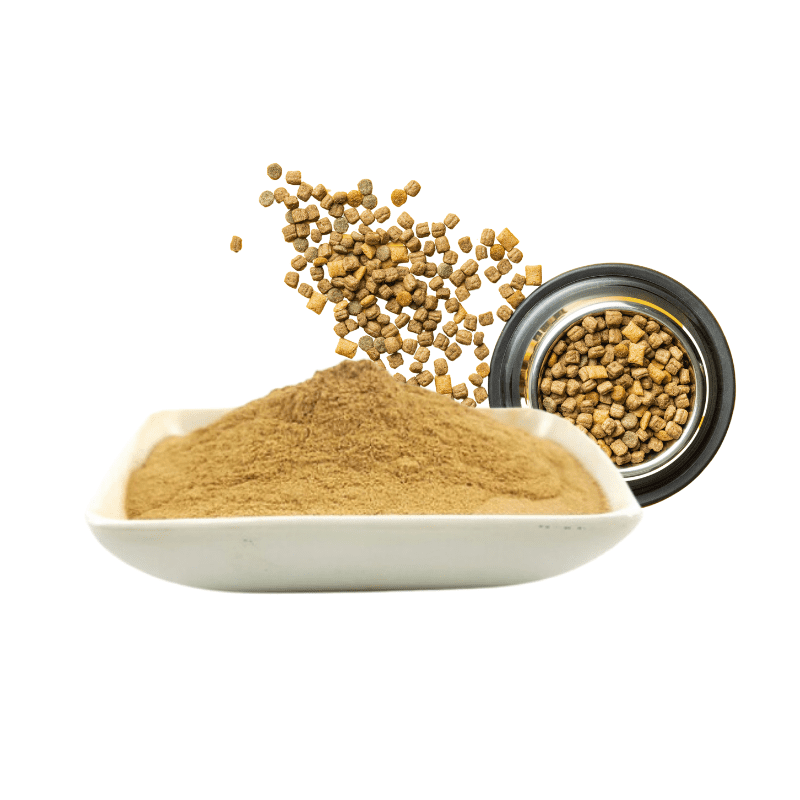
These PFunctional palatants take a hybrid approach: sensory appeal + health utility.
One example: Lallemand’s LALPROBIOME product line is marketed for digestive care, immune support, and antioxidant optimization in pets — a clear example of blending palatant and probiotic/functional technology. bio-lallemand.com
Another trend: integrating β-glucans from yeast to modulate immune response, while embedding them in palatant matrices so they don’t interfere with aroma or flavor. biorigin.net
Cat Food Palatability: Challenges & Strategies
Cats are notoriously picky eaters, and making cat food palatable is an art and science. For cat food formulations, palatability must achieve:
- Strong, appealing aroma to trigger olfactory engagement
- Taste complexity (umami, fat, acid, salts, amino compounds)
- Clean finish with minimal off-notes
- Functional compatibility (no bitterness, no off-flavors from added actives)
Because cats have a more sensitive sense of smell (and often fewer taste receptors than dogs), palatants used in cat food must be especially potent and clean.
When embedding functional elements (e.g. probiotics, immune modulators) into cat food palatants, formulators must ensure:
- Stability — the functional actives survive processing (extrusion, canning, retort).
- No sensory masking — the active ingredient should not introduce bitterness, metallic, grassy, or chemical notes.
- Concentration balance — the dose of functional actives must be high enough to confer benefit, but low enough not to disrupt palatability.
- Synergy with flavor precursors — using Maillard reaction intermediates, peptides, flavor precursors to mask or enhance flavor interactions.
In short: a cat food flavor enhancer today needs to do more than just odor + taste — it should integrate with the cat’s digestive physiology and health needs.
Functional Palatants for Digestion, Immunity & Nutrient Absorption
Let’s dig deeper into how PFunctional palatants can deliver health benefits — and why those benefits matter in the pet food value chain.
1. Digestive Support & Gut Microbiome Modulation
Poor digestion or gut imbalance can reduce nutrient uptake, lead to stool quality issues, and weaken the overall health of the pet. By embedding prebiotic oligosaccharides, probiotic strains, enzyme boosters, fiber blends into palatant carriers, manufacturers can promote better digestion and gut health. profypet.com+2bio-lallemand.com+2
This is especially appealing in formulations for performance cats/dogs, aging pets, or those on limited-ingredient diets.
2. Immune Support & Anti-Oxidant Action
The gut is a central immune organ — modulating it can influence systemic immunity. Incorporating β-glucans, MOS (mannan-oligosaccharides), yeast derivatives, or plant polyphenols into palatants can help modulate immune response. biorigin.net+1
These ingredients must be presented in a palatable matrix, so pets still consume the food readily.
3. Enhanced Nutrient Uptake & Bioavailability
Some functional palatants may be formulated with chelation technology or nutrient carriers (e.g. organic minerals, enzyme cofactors) that promote absorption of micronutrients, amino acids, or lipids. By ensuring that the pet actually eats the food (thanks to strong palatability), waste is reduced, and absorption efficiency is indirectly improved.
In addition, by supporting digestive enzymes or microbial synergy, the breakdown of macronutrients can be more efficient, further enhancing the marginal benefit of the base raw materials.
Market Dynamics & Forecast Outlook (to 2026)
For your blog readers — pet food factories, contract manufacturers, and palatant wholesalers — it’s essential to understand where the market is heading.
- According to Profypet’s own report, the pet food palatants market is forecast to grow at a mid-single-digits CAGR through 2026. profypet.com
- Market research suggests that the 2024 base size was around USD 2.5 billion, with projections reaching ~USD 4.2 billion by 2033 (CAGR ~6.2 %) Verified Market Reports+1
- Other forecasts place the palatants market at USD 2.25 billion in 2025, growing to ~USD 3.06 billion by 2030 (CAGR ~6.3 %) Research and Markets
- Some reports estimate a slightly lower CAGR (4.9 % to 5.2 %) depending on region and segment assumptions. Future Market Insights+1
Key drivers:
- Premiumization: pet owners increasingly expect functional benefits in pet food.
- Clean-label demand: a push toward natural, transparent palatant systems (less reliance on synthetic flavors). 领英+1
- Growing pet ownership in Asia-Pacific and rising disposable income in emerging markets.
- Innovation in biotechnology: microbial, enzymatic, and plant-based palatant technologies. biorigin.net+2bio-lallemand.com+2
- Demand for tailored nutrition for aging, sensitive, or therapeutic applications.
For your timeframe (to 2026), this suggests solid expansion potential — especially for suppliers that can deliver differentiated, functional palatants rather than commodity flavorings.
What Pet Food Manufacturers & Wholesalers Should Look For
If you’re sourcing or manufacturing palatants (for cat food, dog food, or mixed pet food), here are key criteria and value levers you can emphasize:
1. Dual-function design
Look for palatants that not only deliver aroma and flavor, but also carry functional actives (prebiotics, immune modulators, enzyme boosters). The differentiation lies here.
2. Proven efficacy & stability
Your palatant should be backed by in vitro / in vivo testing showing digestive, immune, or absorption benefits, and should withstand processing conditions (e.g. extrusion, heat, moisture, shelf life).
3. Sensory integrity
Even with added functional ingredients, the aroma and taste must remain strong (especially for cats), with no off-notes or masking effects. Consistency (batch-to-batch) is critical. en.allpetfood.net+1
4. Regulatory compliance & label claims
Be sure the palatant ingredients align with permitted feed additive lists in your target markets. Also, structure claims carefully (e.g. “supports digestion” vs. “treats disease”).
5. Scalability & cost efficiency
The added functional elements should not render the palatant prohibitively expensive. Seek suppliers that can scale production of functional raw materials, and optimize cost/performance balance.
6. Collaborative development & customization
Offer co-development (tailoring to your brand’s flavor profile, species, processing method). A supplier that can adapt to your specifications adds value.

Sample Positioning: Cat Food Palatability, Flavor Enhancers & Suppliers
- Cat food palatability is a delicate balance — small changes matter. A strong, meaty aromatic core remains essential, but to stay competitive, top-tier cat formulas now incorporate palatants that support gut health and immune balance.
- Cat food flavor enhancer suppliers are evolving: not just offering raw digest blends, but also offering functional blends (e.g. digest + MOS + yeast extract) as a “plug-and-play enhancer for cat/dog formulas.”
- Palatability enhancer for pet food should be viewed as a strategic asset — one that can justify premium pricing if it contributes to pet health, improved feed conversion, or reduced food waste.
- Pet food ingredients & feed additives suppliers need to position palatants not merely as “flavoring,” but as functional delivery systems that add value beyond taste.
- Palatant wholesaler / supplier should highlight their R&D capabilities, quality assurance, stability in harsh processing environments, and efficacy data when pitching to pet food factories.