Cat Appetite Enhancer: How to Improve Cat Food Palatability and Acceptance
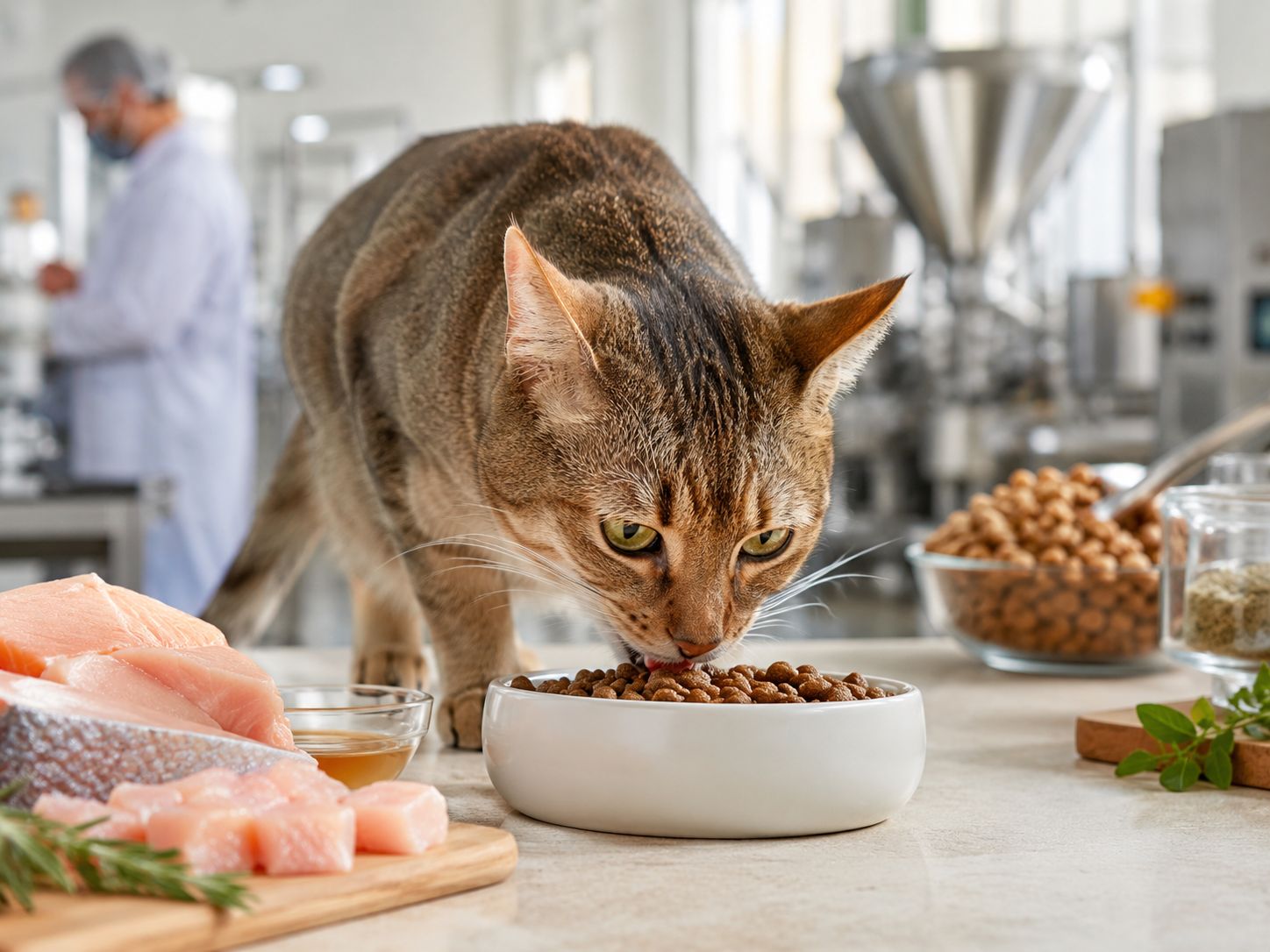
Cats are well known for being selective eaters. For pet food manufacturers, this creates a unique formulation challenge: even a nutritionally balanced cat food may perform poorly in the market if cats do not find its aroma, taste, or mouthfeel appealing.
This is where a cat appetite enhancer can play an important role.
In commercial pet food production, the term cat appetite enhancer usually refers to a palatability enhancer, flavor enhancer, or cat food palatant designed to make food more attractive to cats. Rather than functioning as a pharmaceutical appetite stimulant, these ingredients improve sensory characteristics such as aroma, flavor, surface coating, and aftertaste.
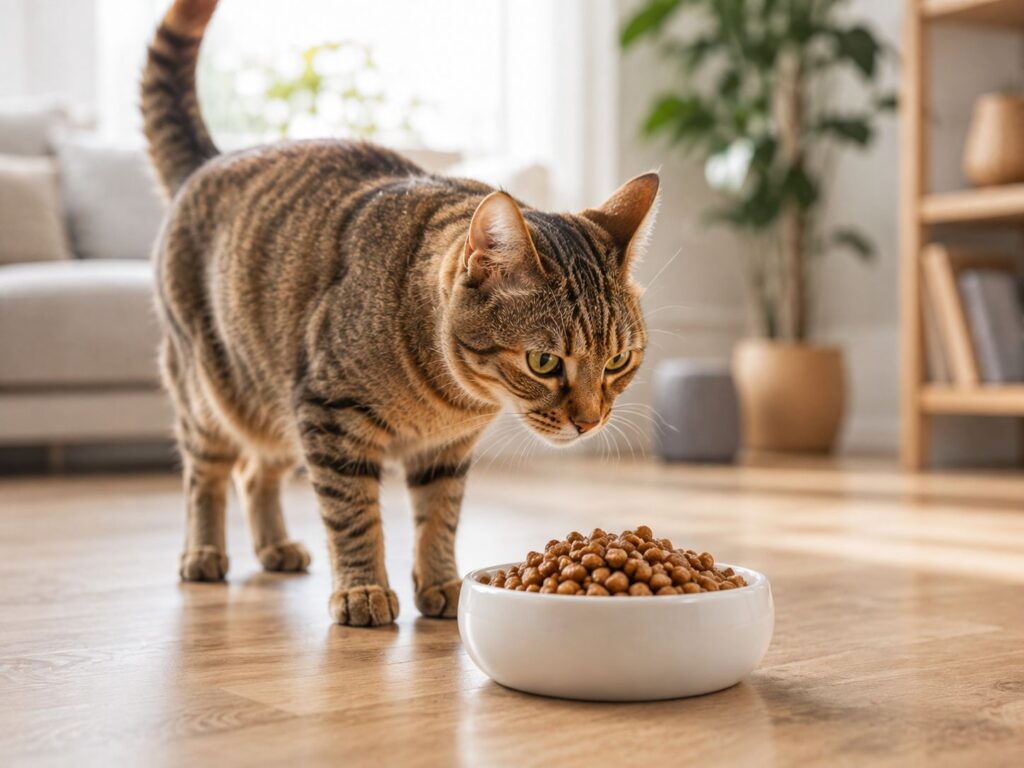
For dry cat food, wet cat food, snacks, and nutritional products, choosing the right appetite-enhancing system can help improve food acceptance, first-choice preference, and overall feeding performance.
What Is a Cat Appetite Enhancer?
A cat appetite enhancer is an ingredient or flavor system added to cat food to increase its sensory appeal.
Depending on the formulation, it may be available as:
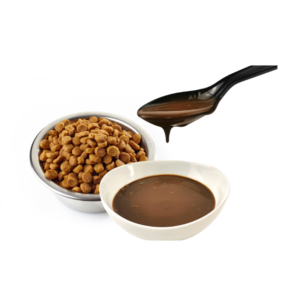
- Powder palatants
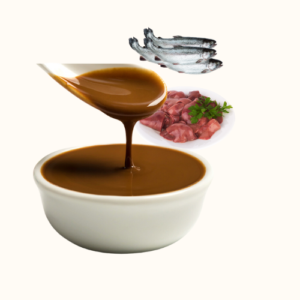
- Liquid palatants
- Paste or semi-liquid flavor enhancers
- Hydrolyzed animal protein flavors
- Chicken liver-based palatants
- Fish-based flavor systems
- Yeast-derived flavor ingredients
- Maillard reaction flavors
These ingredients are commonly used by pet food manufacturers to strengthen the smell and taste of finished products.
Cats rely heavily on aroma when evaluating food. Therefore, a highly effective cat food appetite enhancer must deliver an attractive aroma before the cat begins eating, while also maintaining a pleasant taste throughout the feeding process.
Why Is Palatability So Important in Cat Food?
Nutrition is essential, but cats must first be willing to eat the food.
A formula can contain premium proteins, vitamins, minerals, functional ingredients, and carefully selected raw materials, yet still achieve poor feeding performance if its sensory profile is weak.
Palatability is influenced by several factors.
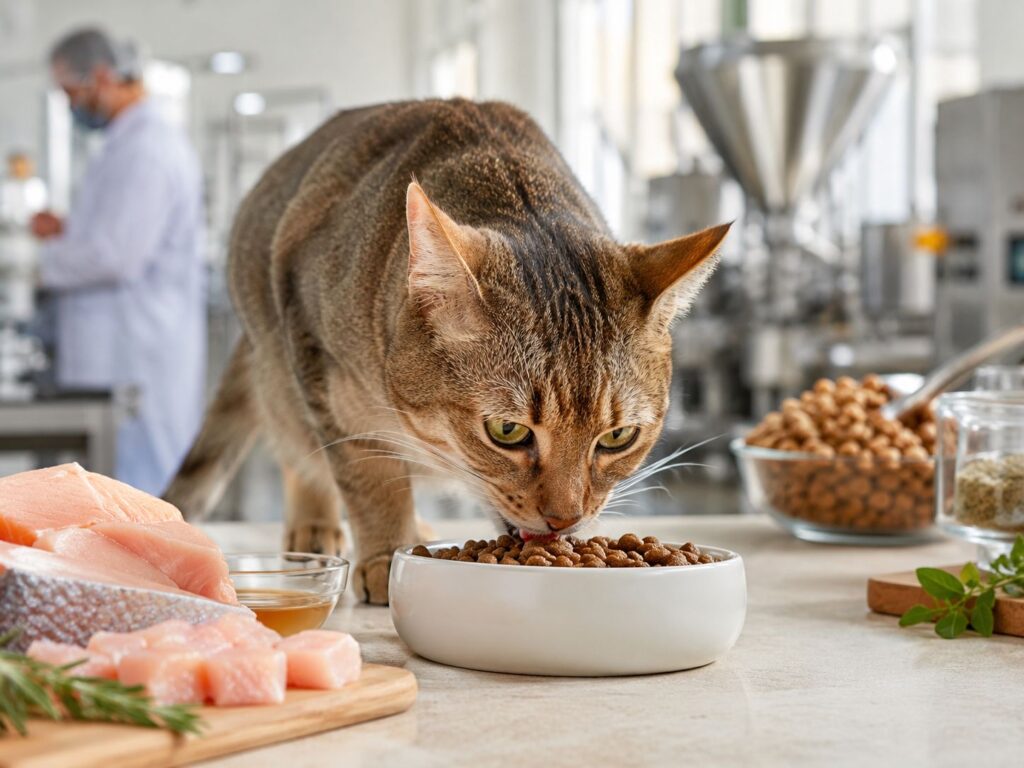
Aroma
The smell released from the food is often the first factor that attracts a cat to the bowl.
Strong but balanced meat, poultry, liver, or fish aromas can increase initial interest.
Taste
After the first bite, taste becomes critical.
A good palatant helps create a savory flavor profile that encourages continued eating.
Fat Coating
Fat is often applied to dry kibble after extrusion.
It can improve mouthfeel while also acting as a carrier for liquid and powder palatants.
Texture
Kibble hardness, shape, size, moisture level, and surface characteristics can also influence acceptance.
Freshness
Oxidized fat, stale ingredients, or excessive storage time can reduce aroma quality and negatively affect food acceptance.
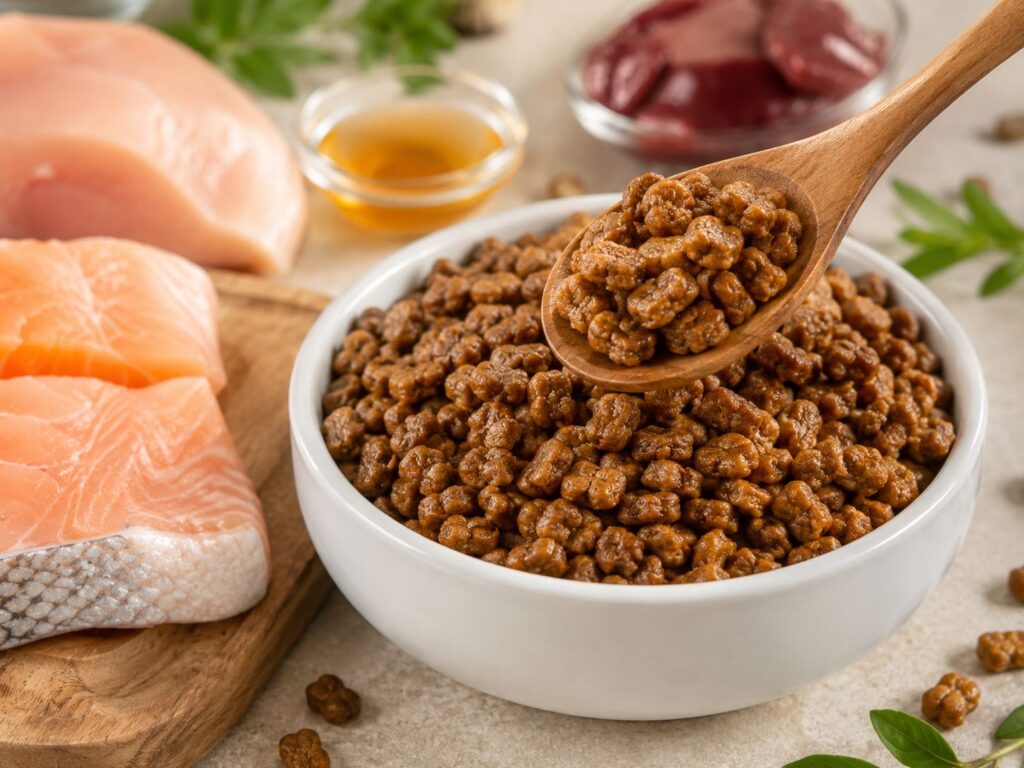
For this reason, appetite enhancement should be considered as part of the entire formulation and production process rather than as a single additive.
How Does a Cat Appetite Enhancer Work?
A cat appetite enhancer typically works by improving one or more sensory signals associated with food.
The most important mechanisms include:
- Increasing attractive meat or fish aroma
- Improving savory taste
- Enhancing surface flavor on kibble
- Supporting stronger first-bite acceptance
- Creating a more consistent feeding experience
- Reducing undesirable raw-material odors
In dry cat food, the palatant is often concentrated on the surface of the kibble because this is the first area the cat smells and tastes.
For many formulas, a combination of liquid and powder palatants provides better performance than using only one type.
Powder vs. Liquid Cat Appetite Enhancers
Pet food manufacturers can choose different palatant formats depending on the recipe, equipment, production process, and target product positioning.
Powder Cat Food Palatants
Powder palatants are widely used for dry cat food.
They are normally applied during the final coating stage after extrusion and drying.
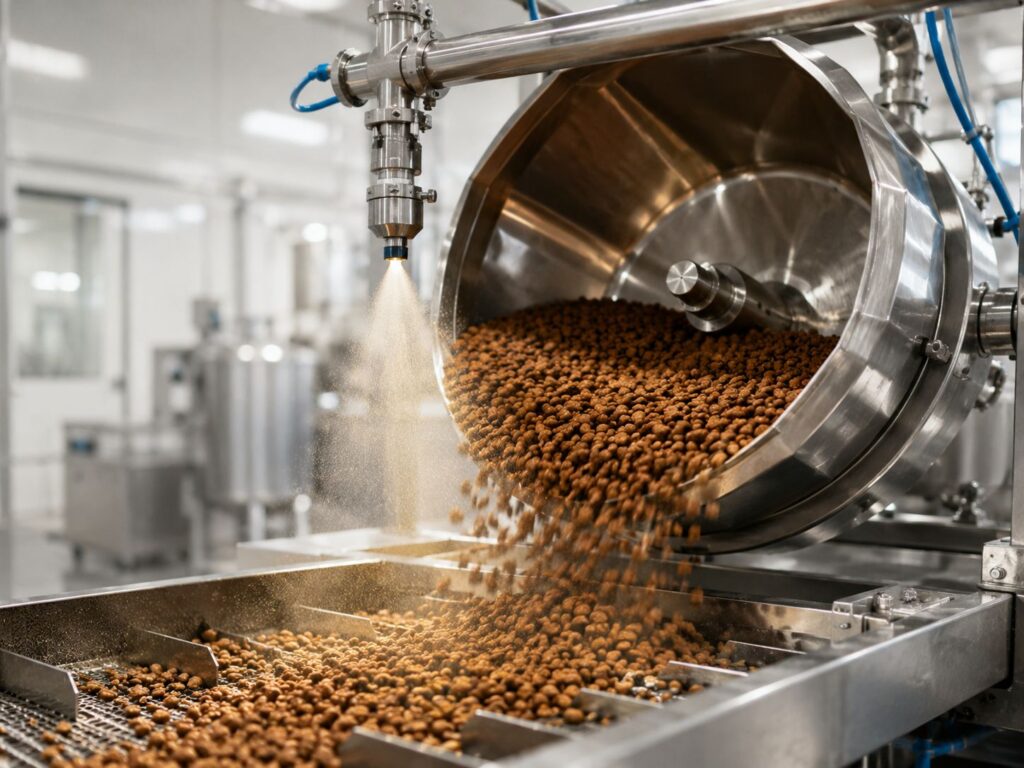
Typical advantages include:
- Strong surface aroma
- Easy handling
- Good storage stability
- Convenient dosage control
- Suitable for dry kibble coating
- Can be combined with fat and liquid palatants
Powder cat appetite enhancers may contain hydrolyzed animal proteins, yeast products, liver-derived ingredients, flavor compounds, or Maillard reaction products.
A typical application level may be approximately 1%–2%, depending on the product, kibble formula, and desired palatability level.
Actual dosage should always be determined through formulation testing and palatability trials.
Liquid Cat Food Palatants
Liquid palatants provide another effective way to enhance aroma and flavor.
They are commonly used for:
- Dry cat food
- Semi-moist food
- Wet food
- Pet snacks
- Functional pet nutrition products
Liquid products can penetrate or coat the food surface and may provide a rich meat or fish aroma.
In dry food production, a common coating sequence is:
Fat → Liquid Palatant → Powder Palatant
This approach allows the fat and liquid components to distribute across the kibble surface before the powder layer is applied.
For some applications, liquid or paste palatants may be used at approximately 4%–6%, depending on formulation requirements and product concentration.
The correct inclusion rate should be validated through factory trials.
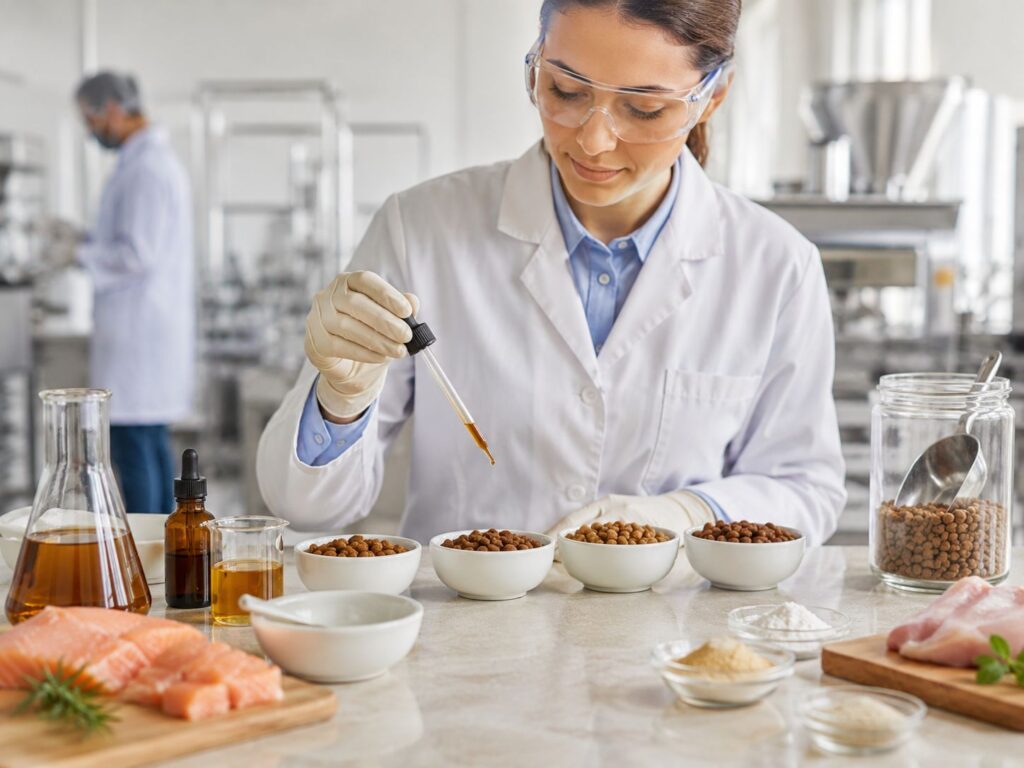
Why Chicken Liver Is Commonly Used in Cat Food Flavor Enhancers
Chicken liver is widely used in pet food palatability systems because it naturally provides a rich savory profile.
Through controlled enzymatic hydrolysis, proteins can be broken down into smaller peptides and amino acids that contribute to flavor and aroma.
Hydrolyzed chicken liver ingredients may help provide:
- Strong meaty aroma
- Rich umami characteristics
- Good compatibility with poultry-based formulas
- Improved surface flavor
- High acceptance in many cat food applications
For manufacturers developing chicken, poultry, or mixed-protein recipes, a hydrolyzed chicken liver palatant can be an effective option.
It may also be combined with fish flavors when a more complex aroma profile is required.
Fish-Based Appetite Enhancers for Cats
Fish flavors are particularly relevant to feline food development.
Common flavor directions include:
- Marine fish
- Tuna-style aroma
- Salmon-type flavor
- Mixed poultry and fish
- Seafood-inspired palatants
Fish-based flavor systems may be especially suitable for brands producing:
- Adult cat food
- Premium cat kibble
- Seafood recipes
- Wet cat food
- Cat treats
However, stronger aroma does not always mean better palatability.
The goal is to create a balanced aroma profile that attracts the cat without producing an overpowering or unstable smell.
Cat Appetite Enhancer for Dry Cat Food
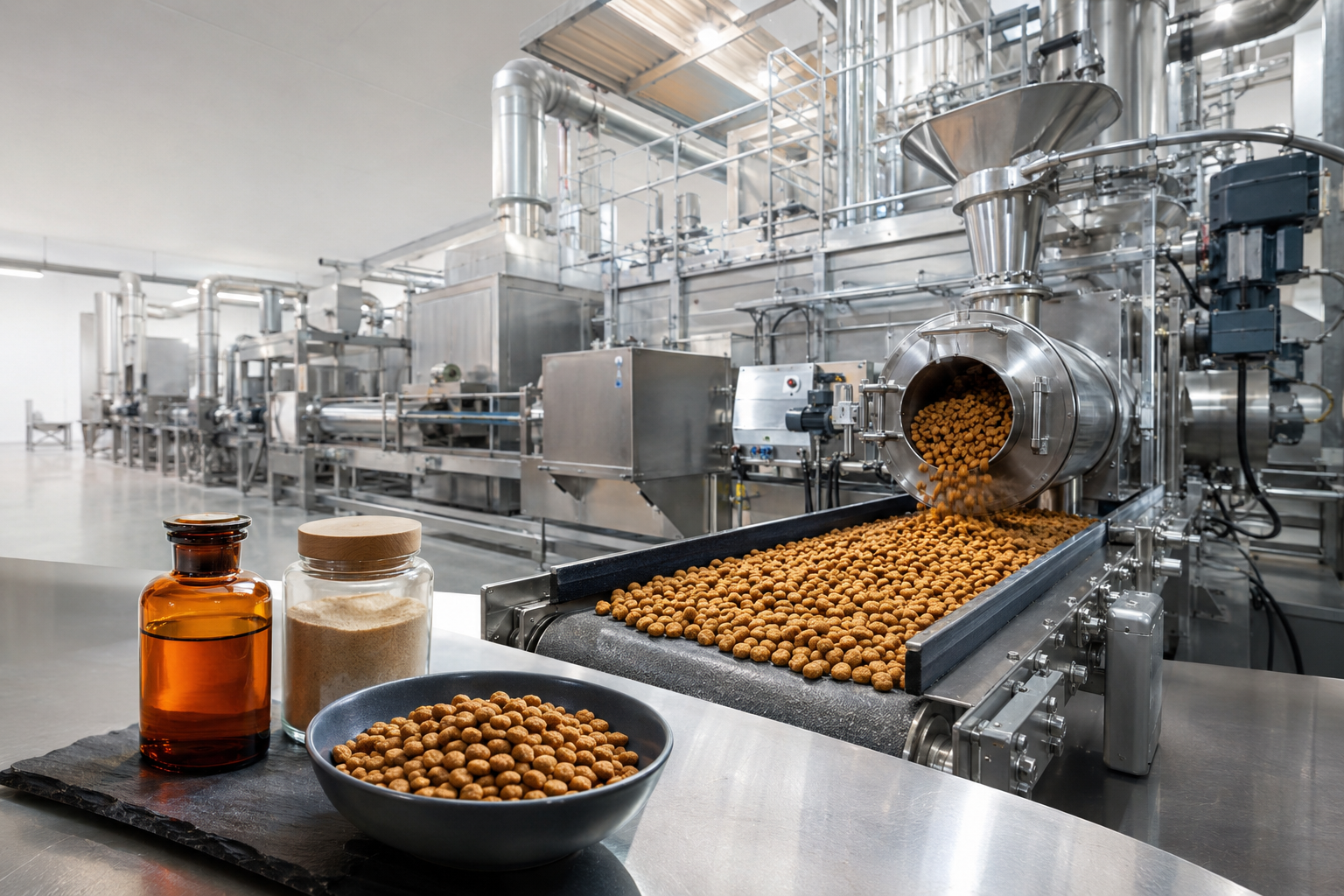
Dry kibble presents specific palatability challenges because extrusion and high-temperature processing can reduce some naturally attractive aromas.
After extrusion, kibble generally passes through drying and cooling before the final coating stage.
The appetite enhancer can then be applied to the surface.
A typical process may include:
- Kibble extrusion
- Drying
- Cooling
- Fat coating
- Liquid palatant application
- Powder palatant application
- Final cooling
- Packaging
Applying the palatant after major heat processing helps preserve more of its aromatic characteristics.
The coating must also be evenly distributed.
Uneven application may result in inconsistent palatability from one kibble piece or batch to another.
Cat Appetite Enhancers for Premium vs. Economy Cat Food
The required palatability solution depends on the product positioning.
Economy Cat Food
Cost control is usually more important.
Manufacturers may focus on:
- Cost-effective poultry-based palatants
- Strong aroma at controlled dosage
- Efficient coating systems
- Stable raw-material performance
Mid-Range Cat Food
Formulators generally seek a balance between cost and feeding performance.
A combined liquid and powder palatant system can often provide strong results.
Premium Cat Food
Premium formulations may require:
- More complex flavor profiles
- Higher-quality hydrolyzed proteins
- Customized aroma systems
- Stronger preference-test performance
- Greater batch-to-batch consistency
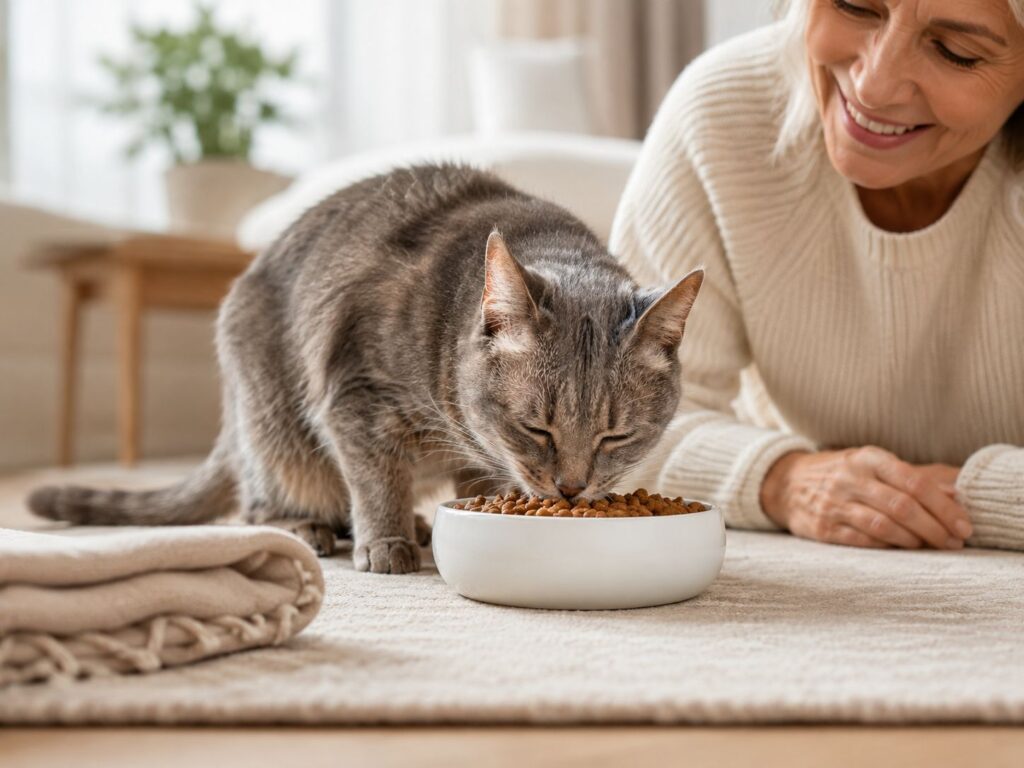
For premium brands, palatability testing becomes particularly important because consumer expectations are higher.
How to Evaluate a Cat Food Palatability Enhancer
Choosing a cat appetite enhancer should not be based on aroma alone.
Professional pet food manufacturers normally evaluate several parameters.
First Choice
Which food does the cat approach or taste first?
Intake Ratio
How much of each formula does the cat consume?
Consumption Speed
Does the cat continue eating after the first bite?
Repeat Preference
Does the same preference remain consistent across multiple feeding sessions?
Aroma Stability
Does the palatant remain attractive after processing and storage?
Compatibility
Does the palatant perform well with the specific fat, protein, and kibble matrix?
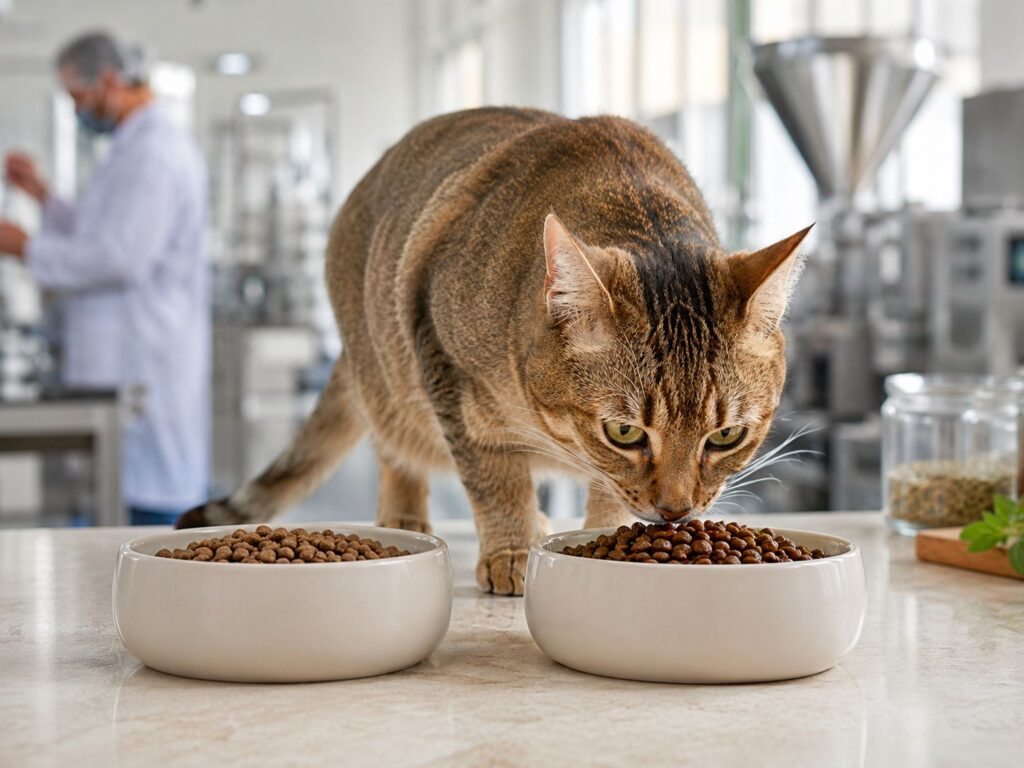
Two-bowl feeding trials are commonly used to compare a control formula against a formula containing a new palatant.
Testing helps manufacturers determine whether a new appetite enhancer produces a meaningful improvement rather than simply a stronger smell.
Factors That Can Reduce Cat Food Acceptance
A palatant cannot completely compensate for problems elsewhere in the formulation.
Manufacturers should also monitor:
Oxidized Fat
Fat oxidation can create unpleasant odors and reduce food acceptance.
Excessive Processing
High temperatures may damage aroma compounds or alter protein flavors.
Poor Ingredient Quality
Inconsistent meat meals, oils, or animal proteins can create batch-to-batch differences.
Incorrect Palatant Dosage
Too little may provide insufficient aroma.
Excessive amounts may increase cost without delivering proportional benefits.
Uneven Coating
Poor mixing can cause inconsistent flavor distribution.
Packaging Problems
Exposure to oxygen, heat, or moisture during storage can weaken aroma and freshness.
A successful cat appetite-enhancement program therefore requires cooperation between formulation, processing, quality control, and packaging teams.
Natural Cat Appetite Enhancers in Pet Food
Many pet food brands are now looking for flavor systems that fit simplified or meat-focused ingredient positioning.
Common approaches may include:
- Hydrolyzed chicken liver
- Poultry protein hydrolysates
- Fish hydrolysates
- Animal digest
- Yeast-derived flavor ingredients
- Natural meat flavors
The appropriate solution depends on the target market, label requirements, formulation strategy, and local regulations.
Pet food manufacturers should always confirm ingredient labeling and regulatory requirements in the destination country before commercial production.
How Profypet Supports Cat Food Manufacturers
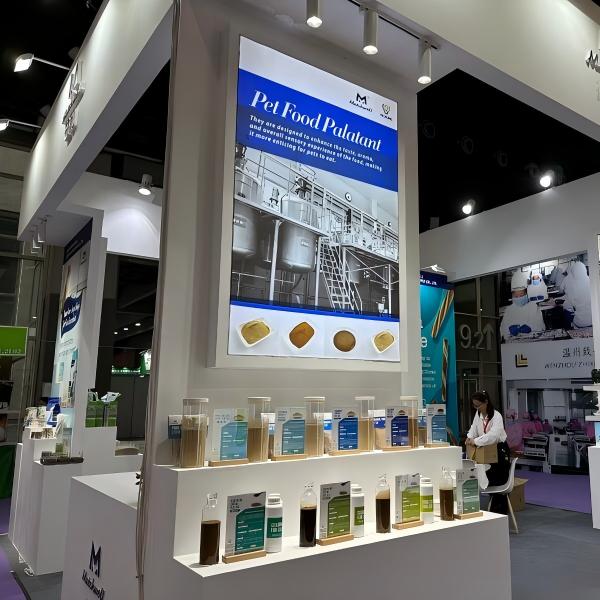
At Profypet, we focus on palatability solutions for commercial pet food production.
Our cat food palatant portfolio can support different applications, including dry cat food and other feline nutrition products.
Available solutions may include:
- Powder cat food palatants
- Liquid cat food palatants
- Hydrolyzed chicken liver flavor systems
- Poultry-based flavors
- Marine fish flavors
- Chicken and fish combination flavors
- Customized palatability solutions
For dry cat food, manufacturers can evaluate different liquid and powder combinations according to their target price range and palatability requirements.
Our technical team can also work with customers based on factors such as:
- Base formula
- Protein source
- Fat type
- Kibble processing method
- Target dosage
- Target market
- Required flavor direction
- Product cost target
Palatability trials can then be used to identify the most appropriate solution.
How to Choose the Right Cat Appetite Enhancer
Before selecting a product, pet food manufacturers should provide as much information as possible about the base formula.
Useful information includes:
- Dry or wet cat food
- Protein source
- Current fat coating level
- Existing palatant
- Current palatant dosage
- Target market
- Target product price
- Current palatability problem
- Preferred chicken, liver, fish, or mixed flavor direction
For example, a dry chicken-based cat kibble may perform well with a chicken-liver liquid palatant combined with a high-performance powder palatant.
A seafood recipe may require a fish-oriented liquid flavor or a poultry-and-fish combination.
There is no single appetite enhancer that performs best in every formula.
The most effective solution is usually determined by testing the palatant in the actual finished food.
Frequently Asked Questions About Cat Appetite Enhancers
What is the difference between a cat appetite enhancer and an appetite stimulant?
In pet food manufacturing, a cat appetite enhancer normally refers to a palatant or flavor enhancer that makes food smell and taste more appealing.
A medical appetite stimulant is different and should only be used under veterinary guidance.
Can appetite enhancers be used in dry cat food?
Yes.
Dry cat food is one of the most common applications for powder and liquid palatants.
They are normally applied during the post-extrusion coating process.
Can powder and liquid palatants be used together?
Yes.
Many cat food manufacturers use a combination of liquid and powder palatants to achieve stronger and more balanced palatability.
What is a typical dosage for cat food palatants?
The dosage depends on concentration, formulation, processing conditions, and performance requirements.
Powder palatants may commonly be evaluated around 1%–2%, while liquid or paste systems may be used at higher inclusion levels.
Pilot production and palatability testing are recommended before determining the final dosage.
Does a stronger smell always mean better cat food?
No.
Cats respond to complex combinations of aroma, taste, texture, freshness, and nutritional composition.
An excessively strong aroma does not automatically produce higher intake.
How should cat food palatants be applied?
For dry kibble, a common coating sequence is:
Fat → Liquid Palatant → Powder Palatant
The exact process should be adjusted according to coating equipment and formula requirements.
Final Thoughts
A well-designed cat appetite enhancer can make a significant difference in the sensory performance of cat food.
By improving aroma, taste, and surface palatability, manufacturers can increase food attraction and support stronger feeding acceptance.
However, effective palatability is not created by one ingredient alone.
Raw-material quality, extrusion conditions, fat coating, palatant selection, application method, packaging, and storage all contribute to the final result.
For manufacturers developing new cat food formulas or looking to improve the performance of an existing recipe, testing different cat food palatants is one of the most practical ways to optimize product acceptance.
Profypet provides powder and liquid palatability solutions for different cat food formulations and market segments.