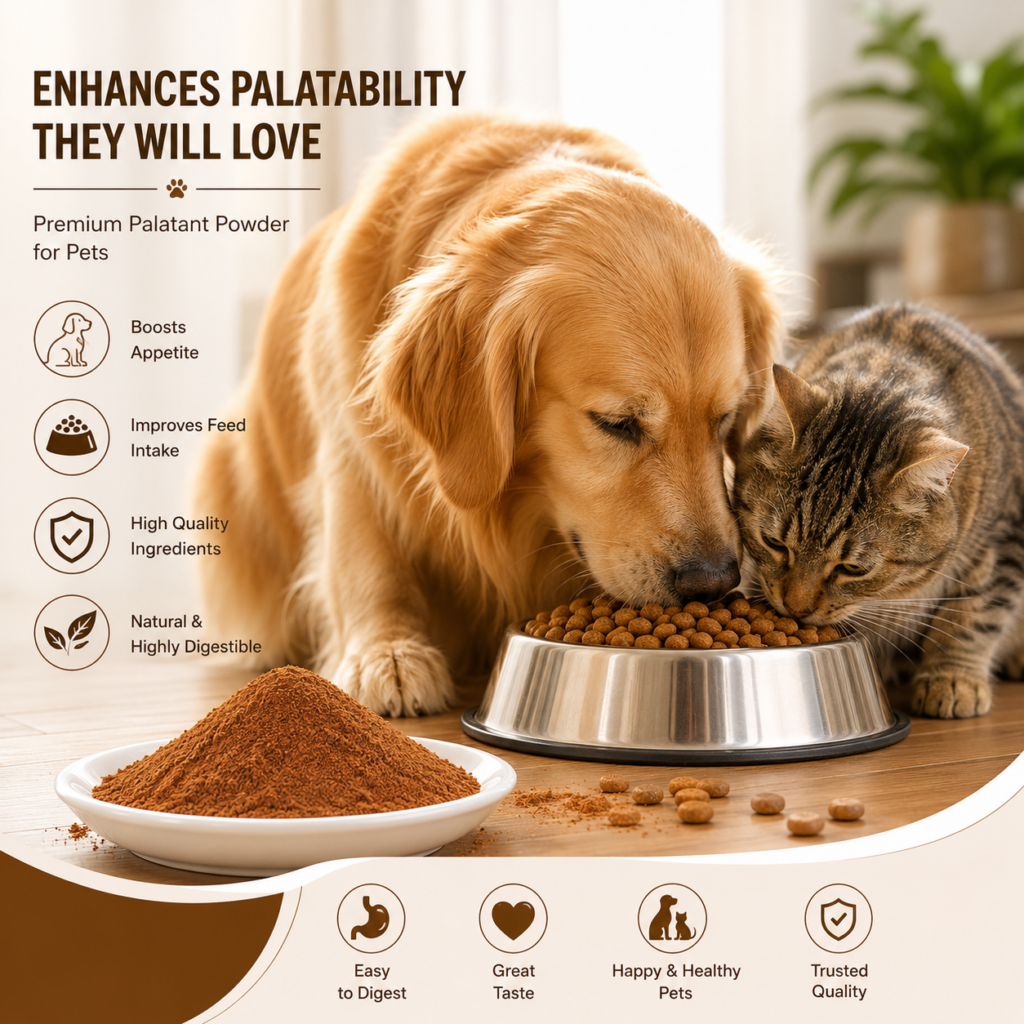
Enhanced Palatability of Pet Food: A 7-Step Guide for Manufacturers
A nutritionally complete formula will not deliver its intended value if pets refuse to eat it. For manufacturers, enhancing palatability is therefore not simply about making food smell stronger. It means improving attraction, first choice, consumption, and repeat acceptance while protecting nutrition, product stability, processing efficiency, and cost.
Profypet works with pet food manufacturers to match powder, liquid, and paste palatants to different formulas and production conditions. The practical process below explains how to identify the cause of poor acceptance, choose the right palatability solution, apply it correctly, and confirm the result before commercial production.
What Does “Enhanced Palatability of Pet Food” Mean?
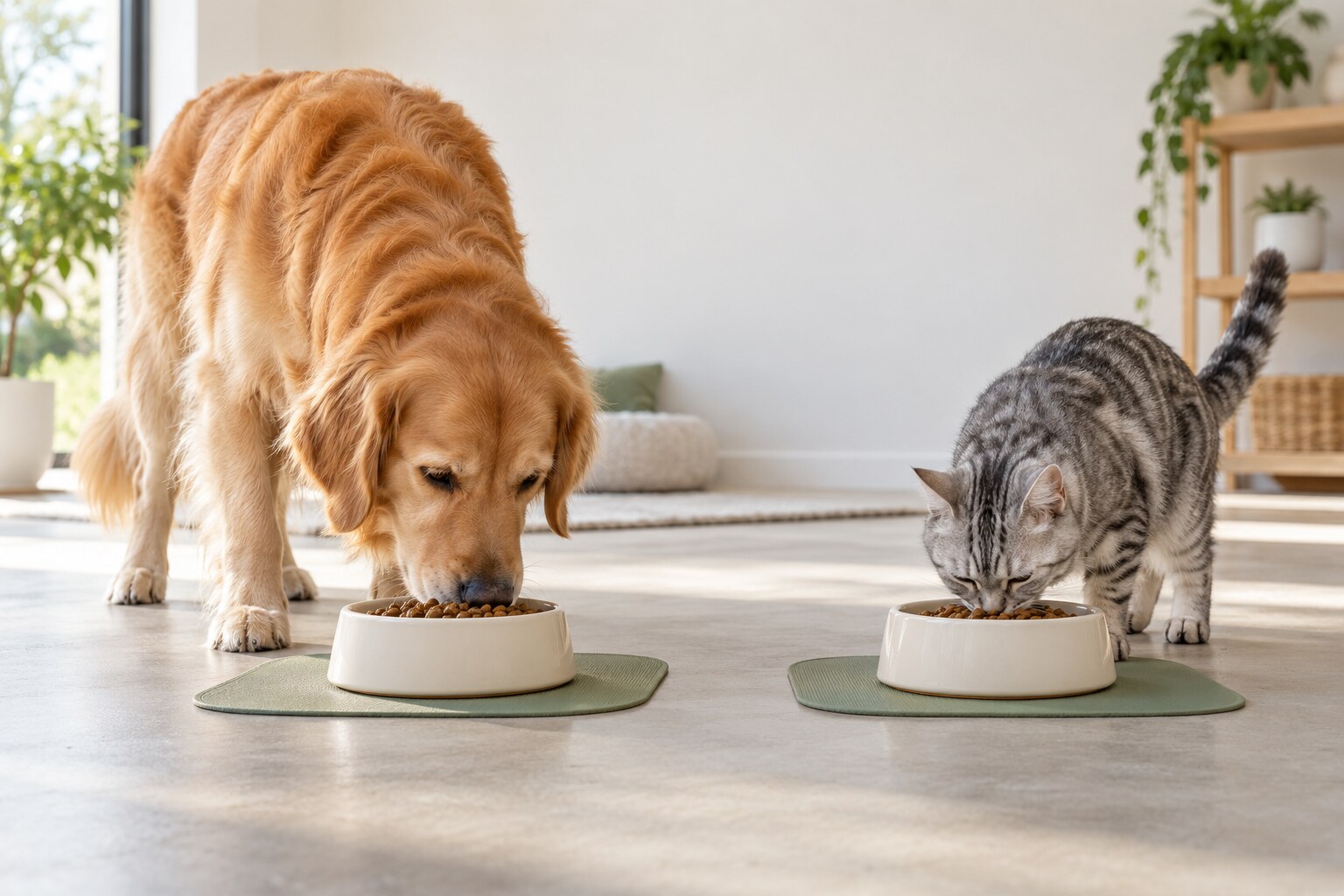
Pet food palatability describes how readily a dog or cat is attracted to and consumes a food. It is usually observed through several behaviors:
- Attraction: Does the pet approach and smell the food?
- First choice: Which food does the pet select first when given an option?
- Consumption: How much does the pet eat within a defined period?
- Repeat acceptance: Does the pet continue eating the food over repeated meals?
Enhanced palatability of pet food means improving these responses in a measurable and repeatable way. It does not mean hiding poor-quality ingredients with a powerful flavor. A successful product combines a stable base formula, suitable texture, effective aroma release, consistent palatant application, and species-appropriate taste cues.
Palatability should also be separated from nutrition. A palatant can encourage intake, but it cannot replace balanced nutrition, safe raw materials, oxidation control, or good manufacturing practices.
Why Do Pets Reject a Well-Formulated Food?
Low intake rarely has only one cause. Before increasing the palatant dosage, manufacturers should examine the complete product system.
1. The aroma is too weak or disappears quickly
Aroma influences the pet before the first bite. High processing temperatures, long storage, poor barrier packaging, or an unsuitable coating stage can reduce volatile aroma compounds. A product may smell acceptable immediately after production but become less attractive after several weeks.
2. The taste profile does not match the target species
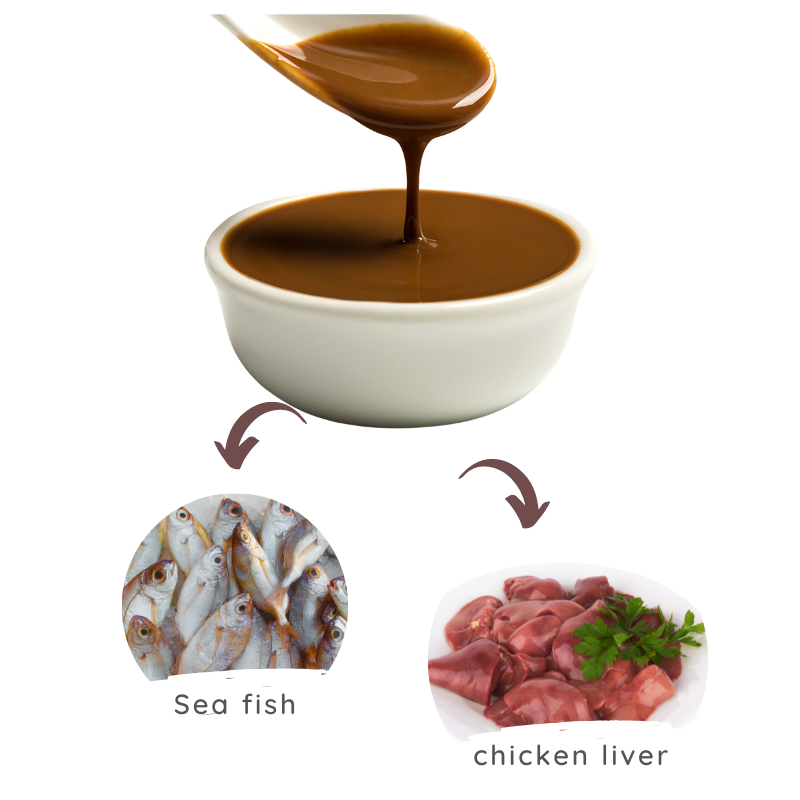
Cats and dogs do not respond to flavor in the same way. Cats often require a more precise animal-protein, liver, fish, peptide, or amino-acid profile. Dogs generally accept a broader range of meat and savory notes, but their response still depends on formula, fat level, texture, age, and previous feeding experience.
A palatant that performs well in dog kibble should not automatically be treated as the best choice for cat food.
3. Raw-material variation changes the finished product
Animal proteins, fats, meals, hydrolysates, and plant ingredients can vary between batches. These differences may change aroma, bitterness, aftertaste, texture, or oxidation stability. Even if the palatant remains unchanged, the finished food may not.
4. Processing reduces palatability
Extrusion, baking, retorting, drying, and cooling all affect flavor. Excess heat can drive off attractive aromas or create burnt and bitter notes. Moisture variation can change kibble texture, while poor fat distribution can produce an inconsistent eating experience.
5. The coating is not uniform
In dry pet food, surface application is critical because the first sensory contact happens at the outside of the kibble. Inconsistent spraying, uneven mixing, blocked nozzles, unsuitable kibble temperature, or adding powder too early can produce batch-to-batch variation.
6. Texture does not support continued eating
A pet may approach the bowl but stop after a few bites. This can indicate that attraction is acceptable while hardness, shape, mouthfeel, moisture, particle size, or fat distribution is limiting consumption.
A Quick Palatability Diagnosis
| Observed behavior | Possible cause | What to investigate first |
|---|---|---|
| Pet smells the food and walks away | Weak or mismatched aroma | Aroma profile, palatant type, storage loss, packaging |
| Pet starts eating but stops quickly | Taste, texture, aftertaste, or uneven coating | Kibble hardness, bitterness, fat distribution, powder coverage |
| Fresh product performs well but stored product does not | Oxidation or aroma loss | Fat quality, antioxidants, package barrier, shelf-life stability |
| Results vary between batches | Raw-material or application inconsistency | Ingredient specifications, dosing accuracy, nozzle and mixer performance |
| Laboratory samples perform well but factory batches do not | Scale-up or process problem | Coating temperature, mixing time, spray pattern, production sequence |
This diagnosis helps the development team choose a targeted correction instead of simply adding more flavor.
How to Enhance Pet Food Palatability in 7 Steps
Step 1: Define the desired outcome
Start with a measurable product goal, not only a keyword such as “better palatability.” Examples include:
- Improve first choice against the current control.
- Reduce refusal in a low-meat dry cat food.
- Maintain intake after a cost-driven protein change.
- Improve repeat acceptance throughout the product’s shelf life.
- Match or exceed a target competitor in a two-bowl test.
The goal should also include constraints such as target species, life stage, product type, market positioning, ingredient restrictions, label requirements, processing temperature, and cost per metric ton.
Step 2: Establish a reliable baseline
Test the current formula before changing it. Depending on the objective, a manufacturer can use:
- Single-bowl testing to measure overall acceptance and consumption.
- Two-bowl testing to compare a trial formula with a control or competitor.
- First-choice observation to assess initial attraction.
- Intake ratio to compare the amount consumed from two products.
- Multi-day testing to identify novelty effects and repeat acceptance.
Use blind coding, rotate bowl positions, keep feeding conditions consistent, and repeat the test with enough animals and meals to reduce random variation. One successful bowl test should not be treated as final proof.
Step 3: Correct the base product before increasing palatant
Palatants perform best when the underlying product is stable. Review:
- Raw-material freshness and batch specifications
- Fat quality and oxidation control
- Protein source and potential bitter notes
- Moisture and water activity
- Kibble size, density, hardness, and shape
- Wet-food texture, gravy distribution, and particle size
- Packaging barrier and expected shelf life
If a product smells rancid, has an unpleasant aftertaste, or varies widely between batches, a higher palatant dosage may only hide the problem temporarily.
Step 4: Select the right palatant format
The best pet food palatability enhancer depends on the food matrix and production process.

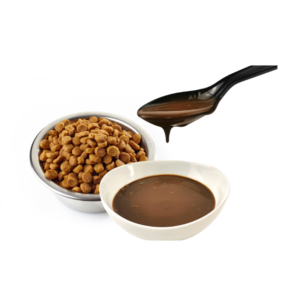
Liquid palatants
Liquid palatants are commonly sprayed onto dry kibble to provide broad surface coverage and a strong initial aroma. They can be useful when attraction is the main weakness or when the manufacturer needs accurate application through an existing liquid coating system.
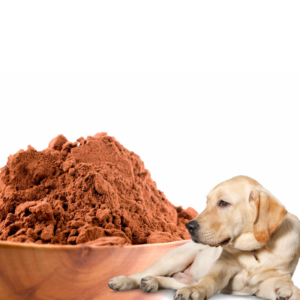
Powder palatants
Powder palatants are often applied as a final dry coating. They can deliver concentrated savory taste and direct contact with the pet’s nose and tongue. They are also useful for products in which a liquid addition is limited or undesirable.
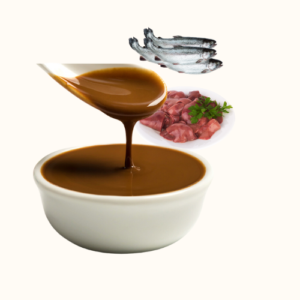
Paste palatants
Paste palatants can provide a rich flavor base and may be incorporated into selected wet, semi-moist, baked, or formed products. Their suitability depends on mixing, moisture, heat exposure, and the finished texture.
Layered palatability systems
Some formulas respond best to a combination of fat, liquid palatant, and powder palatant. The liquid can support aroma and coverage, while the powder strengthens surface taste. The layers must be tested as a system because the carrier, fat, application order, and drying condition can change the final result.
Step 5: Optimize the application process
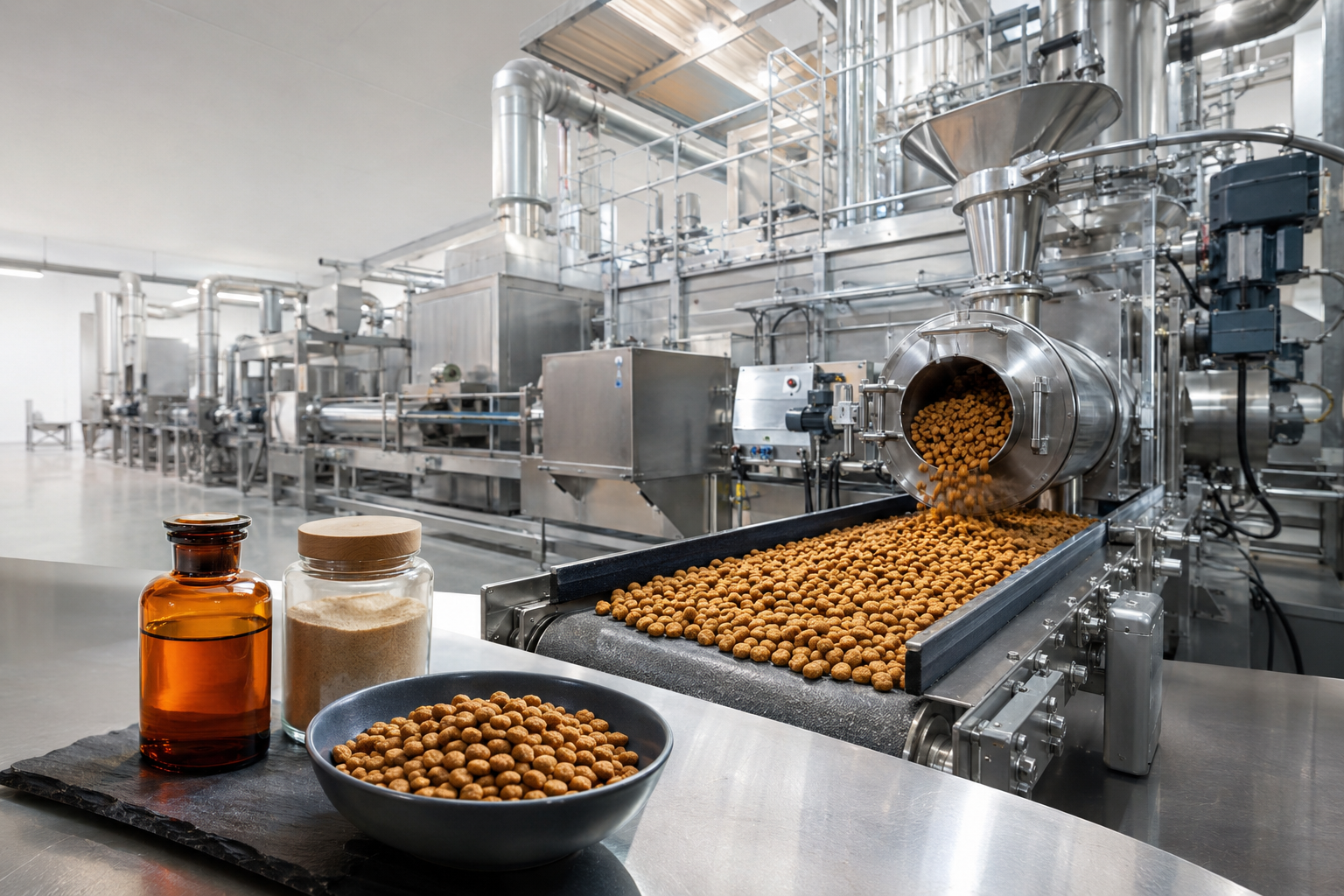
A good palatant can underperform when applied incorrectly. For dry kibble, a common coating sequence is:
- Apply fat or oil evenly.
- Spray the liquid palatant.
- Add the powder palatant as the finishing layer.
This sequence should be adjusted to the formula and equipment. The production team should control:
- Kibble temperature at coating
- Spray pressure and droplet distribution
- Nozzle condition and position
- Mixer or coating-drum speed
- Addition accuracy
- Mixing time
- Powder adhesion and dust loss
- Time between coating and packaging
For wet and semi-moist products, determine whether the palatant should be added before or after a major heat step. Heat stability, interaction with thickeners, pH, moisture, and retort conditions may all affect performance.
Step 6: Optimize separately for cats and dogs
Species-specific development is essential.
For cat food, pay particular attention to aroma intensity, animal-derived savory notes, protein hydrolysates, liver or seafood profiles, aftertaste, and consistency across meals. Cats can be sensitive to unfamiliar aromas and subtle batch changes, so a stronger smell alone is not always better.
For dog food, consider meat profile, fat aroma, roasted or Maillard notes, texture, and the balance between initial attraction and continued consumption. Breed size, age, feeding history, and kibble dimensions can also influence the result.
The same principle applies to life stage and product format. A palatability system for adult dry dog food may not be suitable for puppy food, dental chews, senior diets, treats, or wet cat food.
Step 7: Validate the result and scale it carefully
Once a promising option is found, compare it with the original control under repeatable conditions. Then move through pilot and commercial production without changing several variables at the same time.
Validation should include:
- Palatability performance against the control
- Batch-to-batch consistency
- Coating uniformity
- Nutritional and regulatory impact
- Production compatibility
- Packaging compatibility
- Fresh and aged product performance
- Cost per ton and cost per accepted serving
Shelf-life testing is especially important. A formula that wins immediately after production may not remain attractive after transportation and storage.
Practical Selection Guide
| Product situation | Possible starting approach | Key validation point |
|---|---|---|
| Dry cat kibble with weak first attraction | Species-specific liquid palatant or liquid-plus-powder system | First choice and repeat intake |
| Low-meat dental chew with limited savory taste | Concentrated powder or suitable paste palatant | Consumption and aftertaste |
| Dry dog food with uneven acceptance | Review fat distribution and liquid coating uniformity | Batch consistency |
| Wet food with good aroma but low continued intake | Review taste balance, texture, and heat effects | Meal completion over repeated feedings |
| Product loses acceptance during storage | Combine palatability work with oxidation and packaging review | Aged-product testing |
These are starting points rather than fixed formulas. The final choice should be confirmed through application trials using the manufacturer’s actual ingredients, process, and target market.
Common Mistakes When Using Pet Food Palatants
Treating palatant dosage as the only variable
More is not always better. An excessive level may create an unbalanced aroma, unpleasant aftertaste, processing problems, unnecessary cost, or labeling and nutritional complications.
Using the same solution for every species and product
Cat kibble, dog kibble, dental chews, wet food, and treats have different sensory and process requirements. Begin with the specific food matrix and target animal.
Judging performance only by human smell
Human evaluation is useful for detecting rancidity or production defects, but people and pets do not perceive food in the same way. Controlled feeding tests are essential.
Changing several variables at once
If the development team changes the base formula, fat, palatant, dosage, and processing conditions in one trial, it becomes difficult to identify the reason for improvement or failure.
Ignoring factory-scale application
Bench samples may be hand-coated more evenly than commercial batches. A final solution must work with the factory’s pumps, nozzles, mixers, temperatures, line speeds, and tolerances.
Skipping aged-product testing
Pet food travels through warehouses, containers, distribution centers, and retail shelves. Palatability should be confirmed at relevant stages of the expected shelf life, not only on production day.
Information to Prepare Before Requesting Palatant Samples
To help a supplier recommend a suitable starting solution, prepare the following information:
- Target species and life stage
- Dry, wet, semi-moist, baked, extruded, or freeze-dried format
- Main protein and fat sources
- Approximate meat inclusion and moisture level
- Current palatant type and application stage
- Processing and coating temperatures
- Main problem: attraction, intake, repeat acceptance, storage decline, or cost
- Target market and relevant ingredient or labeling restrictions
- Benchmark product or competitor
- Available palatability test method
Providing this information reduces unnecessary trials and helps the supplier design a more relevant sample plan.
Frequently Asked Questions
What is the difference between a pet food palatant and a flavor?
A flavor usually describes an aroma or taste ingredient. A pet food palatant is developed specifically to improve an animal’s attraction, preference, and intake. It may combine aroma, savory taste compounds, peptides, hydrolysates, fats, carriers, or other functional components.
Is powder or liquid palatant better for dry pet food?
Neither format is automatically better. Liquid palatants can provide surface coverage and aroma, while powders can deliver concentrated surface taste. Many dry-food formulas perform best with a tested combination of fat, liquid, and powder.
Can the same palatant be used for cat food and dog food?
It may be technically possible, but performance should be validated separately. Cats and dogs have different sensory preferences, and a formula optimized for one species may not deliver the same result for the other.
Can palatants compensate for lower meat inclusion?
Palatants can strengthen aroma and savory taste in a lower-meat formula, but they cannot correct poor nutrition, rancid fat, unsafe raw materials, or major texture defects. The base product must remain nutritionally appropriate and stable.
How should pet food palatability be tested?
Use a method that matches the development goal. Single-bowl tests measure acceptance, while two-bowl tests compare preference. Use blind codes, rotate positions, repeat over multiple meals, and confirm promising results in pilot and commercial-scale production.
Build Palatability Into the Product, Not Only Onto the Surface
Enhanced palatability of pet food comes from the interaction of formula, processing, texture, fat quality, aroma release, palatant selection, coating consistency, packaging, and testing. The most reliable improvement is therefore a controlled development process—not a last-minute increase in flavor dosage.
If your current product has low intake, inconsistent acceptance, or declining palatability during storage, Profypet can help evaluate the application and recommend powder, liquid, or paste palatant samples for your formulation.
Request Pet Food Palatant Samples and Application Guidance