Kibble Dog Food Attractants: A 7-Step Guide to Improving Dry Dog Food Palatability
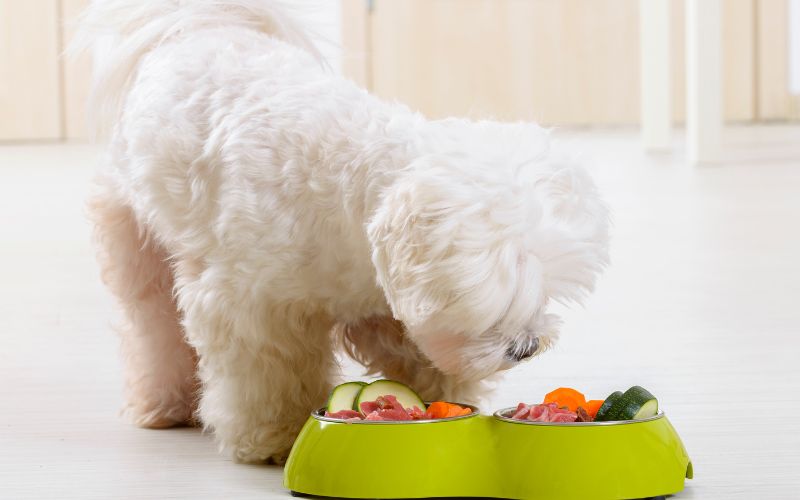
A dog food formula can meet its nutritional targets and still underperform at the bowl. The dog may smell the kibble and walk away, begin eating but stop early, or accept a fresh batch while rejecting the same food after storage.
Kibble dog food attractants are designed to improve the sensory signals that encourage approach, first choice, and consumption. However, selecting a stronger-smelling product is not enough. The result also depends on the base formula, fat quality, extrusion conditions, coating sequence, application accuracy, and palatability testing.
Profypet develops liquid and powder dog food palatants for different formula costs and performance targets. This guide explains how manufacturers can diagnose an acceptance problem, choose a suitable attractant, apply it correctly, and validate the result before commercial production.
What Are Kibble Dog Food Attractants?
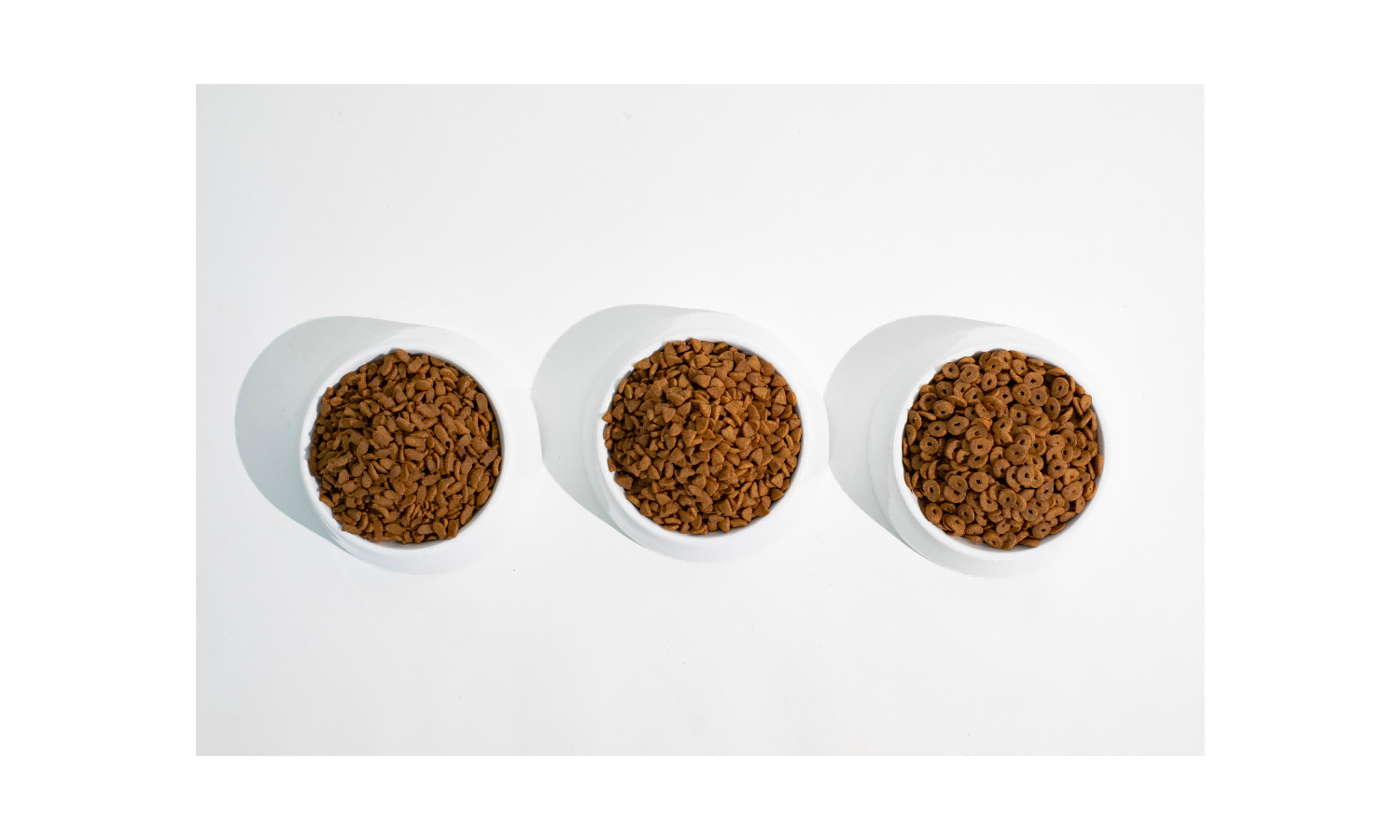
Kibble dog food attractants are ingredients or coating systems used to make dry dog food more appealing through aroma, taste, and mouthfeel. In the pet food industry, they may also be called:
- Dog food palatants
- Pet food digests
- Dog food flavor enhancers
- Palatability enhancers
- Kibble coatings
- Feeding stimulants or appetite attractants
The word attractant often emphasizes the first stage of eating: encouraging the dog to approach and investigate the food. A palatant has a broader role. It may improve initial attraction, first choice, the amount consumed, and repeat acceptance across multiple meals.
Commercial palatants are commonly based on hydrolyzed animal proteins, liver, meat-derived components, peptides, amino acids, yeast products, reaction flavors, fats, carriers, or combinations of these materials. They are available in liquid, paste, and powder formats.
Why Does Dry Dog Food Need Attractants?
Dry kibble is convenient, stable, and economical, but producing an appealing aroma and taste is more difficult than simply adding meat to a formula.
Extrusion and drying change the sensory profile
Dry dog food is exposed to pressure, mechanical energy, heat, and moisture during extrusion. It is then dried to achieve a stable final moisture level. These processes can generate attractive cooked notes, but they can also reduce volatile aromas, alter proteins and fats, or create unwanted flavors when conditions are poorly controlled.
A 2024 scientific review on extruded dry pet food palatability explains that ingredients, processing conditions, coating methods, species differences, and feeding environment can all influence acceptance and preference.
The base formula may not provide enough attraction
Lower-meat formulas, high levels of plant protein, selected fibers, minerals, functional ingredients, or cost-driven ingredient changes may produce bitterness, weak aroma, or an unfamiliar taste. A targeted dog food palatant can help create a more recognizable and consistent meat or savory profile.
The outside of the kibble creates the first impression
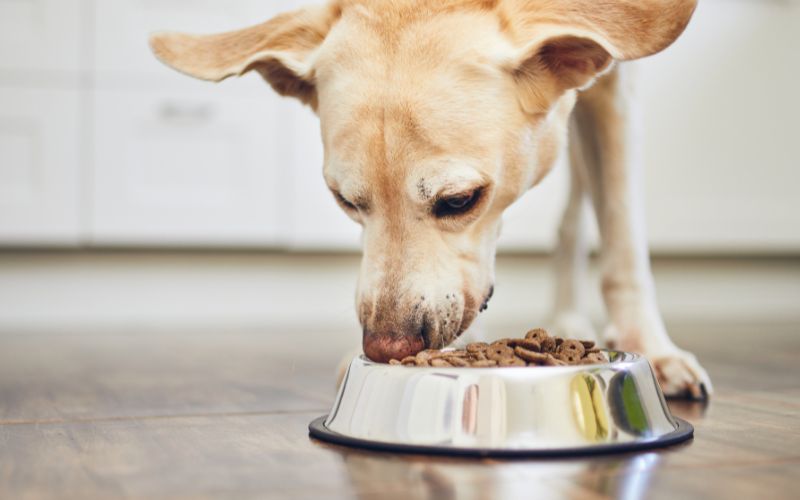
For dry dog food, the pet first encounters the surface. This is why fats, liquid palatants, and powder palatants are frequently applied after extrusion and drying. Surface application places aroma and taste components where they are more accessible to the dog’s nose and mouth.
Storage can reduce attractiveness
Fat oxidation, aroma loss, moisture migration, poor package sealing, and high storage temperatures can weaken palatability over time. An attractant cannot permanently cover rancid or unstable raw materials, so oxidation control and packaging must be considered with flavor development.
What Makes a Dog Eat Kibble?
Palatability is a sequence rather than one reaction:
- Aroma attracts the dog to the bowl.
- Surface taste influences the first bite.
- Texture, hardness, fat distribution, and aftertaste affect continued eating.
- Digestive comfort and previous feeding experience influence repeat acceptance.
This explains why a strong aroma does not always produce high consumption. A dog may approach the bowl quickly but stop eating because of bitterness, hard texture, oxidation, or an unbalanced aftertaste.
Manufacturers should therefore define the exact problem before selecting a kibble attractant.
Quick Diagnosis: What Is Limiting Kibble Acceptance?
| Dog behavior or production result | Possible cause | First action to take |
|---|---|---|
| Dog smells the kibble and walks away | Weak or unfamiliar aroma | Compare liquid palatant profiles and check storage-related aroma loss |
| Dog approaches quickly but eats little | Taste, texture, bitterness, or aftertaste | Review powder palatant, base formula, hardness, and fat quality |
| Dog eats well on the first day but intake declines | Novelty effect or poor repeat acceptance | Run a multi-day feeding test |
| Fresh kibble performs well but aged kibble does not | Oxidation, aroma loss, or packaging failure | Test stored samples and review fats, antioxidants, and package barrier |
| Palatability varies between batches | Inaccurate dosing or uneven coating | Inspect pumps, feeders, nozzles, mixing time, and kibble flow |
| Powder collects at the bottom of the bag | Poor adhesion or excessive powder loss | Review fat coverage, powder application point, and retention time |
| Laboratory samples win but factory batches lose | Scale-up inconsistency | Reproduce laboratory application order and conditions on the production line |
Main Types of Kibble Dog Food Attractants
1. Liquid dog food palatants
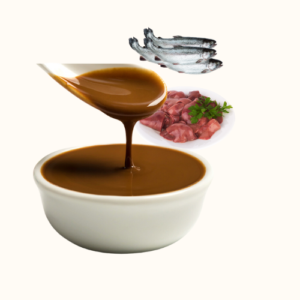
Liquid palatants are commonly sprayed over kibble after fat or oil application. They can provide broad surface coverage, immediate aroma release, and accurate dosing through a properly calibrated liquid system.
They are especially useful when:
- The dog does not approach the bowl readily
- The base kibble has a weak meat aroma
- Uniform coverage is required
- The factory has a stable spraying or coating system
- A liquid-plus-powder strategy will be used
Liquid viscosity, temperature, pump type, nozzle selection, spray pattern, and kibble throughput must be controlled. A good liquid palatant can perform poorly when the spray is uneven or the dosage does not follow the actual kibble flow.
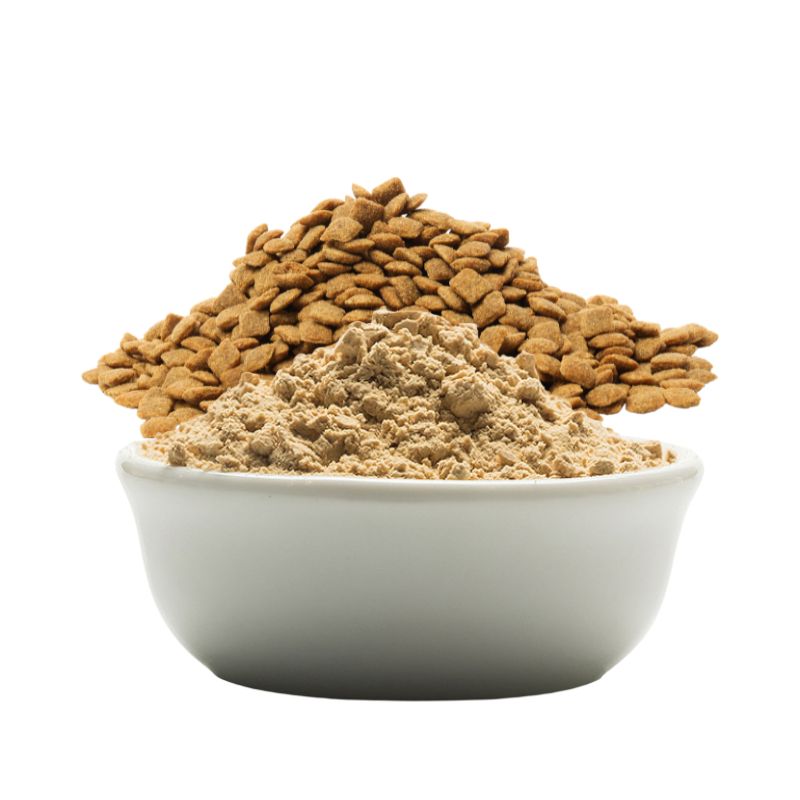
2. Powder dog food palatants
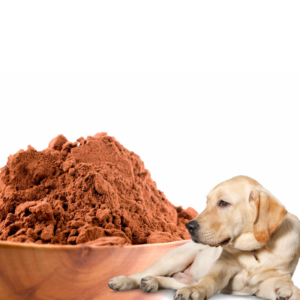
Powder palatants are generally used as a finishing layer. They provide direct surface taste and can add concentrated meat, liver, yeast, or savory notes.
They are useful when:
- Continued intake needs improvement
- The product requires a stronger surface taste
- Liquid addition is restricted
- The manufacturer wants a dry finishing layer
- The formula benefits from a liquid-and-powder combination
Powder flow, moisture control, static electricity, feeder accuracy, adhesion, and dust collection are important. According to APEC’s dry palatant application guidance, uniform fat coverage, correct retention time, dry storage, and accurate flow control are essential to keep powder attached to the kibble.
3. Liquid-and-powder palatant systems
Many dog kibble formulas benefit from using both formats. The liquid contributes aroma and surface distribution, while the powder provides concentrated taste at the final contact point.
The combination should be evaluated as one system. Changing the fat, liquid carrier, application order, kibble temperature, or powder level can change the final performance even when the palatant products remain the same.
4. Fats and oils
Fat contributes energy, mouthfeel, aroma, and powder adhesion. It can also act as a carrier for liquid and dry palatants. However, fat quality is critical. Oxidized or inconsistent fat can reduce acceptance and create batch variation.
The type of fat, oxidation status, application temperature, surface coverage, and interaction with the selected palatant should be included in every trial.

5. Internal flavor and palatability ingredients
Hydrolyzed proteins, poultry digest, yeast products, reaction flavors, and selected taste components may also be incorporated into the formula before extrusion. Internal application can support the overall flavor profile, but heat exposure and interaction with other ingredients must be considered.
For many dry dog foods, internal flavor support and post-extrusion top coating are used together rather than treated as competing approaches.
Profypet Dog Kibble Palatant Selection Guide
The following products provide different starting points for dry dog food trials.
| Product | Format and profile | Suitable starting application |
|---|---|---|
| MYG-QT-01 | Liquid; chicken-liver base with beef flavor; cost-effective positioning | Standard or price-sensitive dry dog food requiring improved aroma and acceptance |
| YCG-QT-916 | Liquid; chicken-liver flavor; medium-to-high performance | Mid-range or premium kibble requiring stronger palatability performance |
| YCG-QT-1011 | Liquid; chicken-liver flavor; high-performance positioning | Demanding formulas, competitive benchmarking, or products requiring a stronger response |
| MYF-QT-01 | Powder; Maillard-style savory profile with salt and yeast components | Dry finishing coat for improved savory taste and continued consumption |
| MYF-QT-02 | Powder; deep-brown, strong-aroma profile with antioxidant support | Kibble requiring a stronger powder finish and aroma impact |
Product selection should begin with the base formula and target result. The highest-performance product is not automatically the most economical choice if a lower-cost option already achieves the required acceptance.
How to Select Kibble Dog Food Attractants in 7 Steps
Step 1: Define the result you need
Avoid a vague goal such as “make the kibble smell better.” Choose a measurable outcome:
- Improve first choice against the current control
- Increase total intake in a single-bowl test
- Recover palatability after reducing meat inclusion
- Maintain acceptance after changing protein or fat suppliers
- Match or exceed a target competitor
- Reduce batch-to-batch variation
- Maintain performance through the expected shelf life
Also define product constraints such as price tier, ingredient claims, target market, regulatory requirements, and maximum cost per ton.
Step 2: Review the base formula and process
Before increasing palatant, examine:
- Main animal and plant proteins
- Fat source and oxidation condition
- Fiber, minerals, functional ingredients, and possible bitter notes
- Extrusion temperature and specific mechanical energy
- Kibble density, porosity, hardness, and shape
- Dryer performance and final moisture
- Product temperature during coating
- Package barrier and storage conditions
An attractant should enhance a stable product. It should not be used to hide rancid fat, serious texture defects, or uncontrolled processing.
Step 3: Choose liquid, powder, or a combination
Use the observed feeding behavior to guide the format:
- Weak approach or first choice: begin by evaluating liquid aroma profiles.
- Good approach but incomplete consumption: evaluate taste, texture, and a powder finishing coat.
- Difficult competitive target: test a layered fat-plus-liquid-plus-powder system.
- High powder loss: correct adhesion and equipment before raising the powder dosage.
The existing coating equipment also matters. Confirm whether the line can accurately meter, spray, mix, and record both liquid and powder additions.
Step 4: Select the appropriate flavor and performance tier
Dogs may respond differently to beef, chicken liver, roasted meat, yeast, or other savory profiles. The best choice depends on the complete formula, not the flavor name alone.
Begin with two or three clearly different candidates rather than testing many nearly identical samples. Include:
- A cost-effective option
- A medium- or high-performance option
- A different liquid, powder, or combination strategy
This creates a more useful comparison and makes the performance-versus-cost decision clearer.
Step 5: Create a controlled dosage trial
Profypet application guidance commonly uses the following starting ranges for trials:
- Powder palatants: approximately 1%–2%
- Liquid or paste palatants: approximately 4%–6%
Some low-cost or difficult base formulas may require a higher liquid or paste level, but dosage should always be confirmed through formulation review, processing trials, nutrition calculations, local regulatory checks, and palatability testing.
Test incremental levels rather than jumping directly to the maximum. Keep the base formula, fat, process, and coating conditions unchanged so the effect of the attractant can be identified.
The most economical level is the lowest dosage that delivers the required and repeatable performance—not simply the lowest price per kilogram.
Step 6: Optimize the coating sequence
A common dry dog food coating sequence is:
- Apply fat or oil evenly.
- Spray the liquid palatant.
- Apply the powder palatant as the finishing layer.
Allow enough distribution and retention time between stages. If the fat layer is uneven, the powder layer will also be uneven. If liquid or fat encapsulates the powder, fewer taste-active components may remain accessible at the surface. If adhesion is too weak, powder may fall to the bottom of the bag.
The production team should control:
- Kibble mass flow
- Kibble temperature
- Pump and feeder calibration
- Liquid temperature and viscosity
- Nozzle pressure and spray pattern
- Mixer or coating-drum speed
- Retention time
- Powder distribution
- Dust and product loss
- Time between coating and packaging
Step 7: Validate with palatability and shelf-life testing
Use a test method that matches the goal.
Single-bowl test
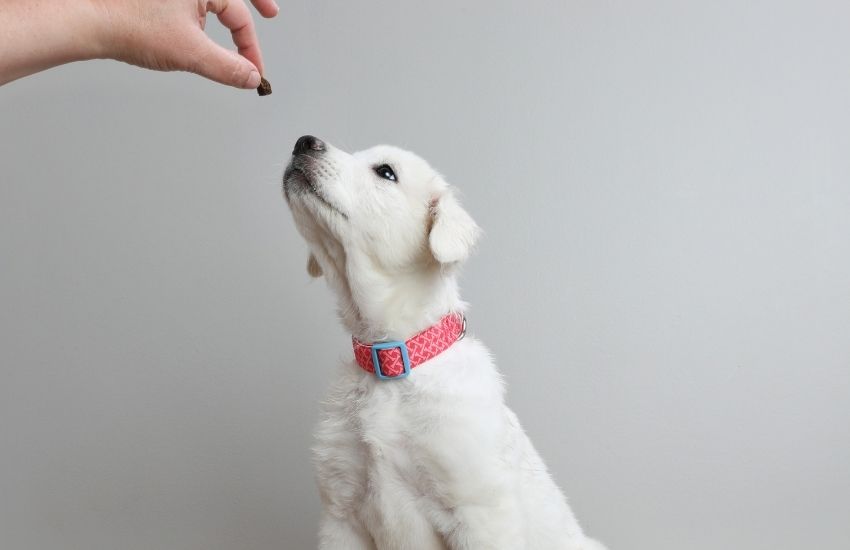
A single-bowl test measures acceptance and how much of one food the dogs consume. It is useful when the main concern is refusal or meal completion.
Two-bowl test
A two-bowl or paired-preference test compares the trial food with a control or competitor. Common observations include first choice, amount eaten from each bowl, and intake ratio.
For two foods, A and B, an intake ratio can be calculated as:
Intake Ratio A = Intake of A ÷ (Intake of A + Intake of B)
Use blind sample codes, rotate bowl positions, maintain consistent feeding conditions, and test over enough meals to reduce side bias and novelty effects. The scientific review cited above identifies one-bowl testing for acceptance and paired testing for preference as standard approaches used to evaluate dry pet food palatability.
Finally, repeat testing with pilot and factory-produced batches. Fresh laboratory samples do not prove that the same performance will remain after scale-up, transportation, or storage.
Troubleshooting Kibble Attractant Application
Powder is visible at the bottom of the bag
Possible causes include insufficient or uneven fat, poor application position, unsuitable powder flow, excessive dosage, inadequate retention time, or rough handling after coating.
Liquid palatant creates wet spots or uneven color
Inspect nozzle coverage, droplet size, liquid viscosity, kibble feed rate, spray pressure, coating temperature, and mixer loading.
Aroma is strong at the factory but weak after storage
Review fat oxidation, packaging barrier, sealing quality, storage temperature, volatile-aroma loss, and interaction between the liquid palatant and carrier.
Palatability changes between production batches
Verify raw-material specifications, pump and feeder calibration, actual coating addition, kibble temperature, mixer time, fat quality, and final moisture. Use batch records rather than relying on the set points shown on the control panel.
Raising dosage no longer improves results
The formula may have reached a response plateau, or another factor may be limiting consumption. Recheck texture, bitterness, fat quality, processing, and the balance between liquid aroma and powder taste.
Common Mistakes When Choosing Dog Food Attractants
Assuming the strongest human-perceived smell is best
Human sensory inspection can detect defects, but people and dogs do not experience aroma and taste in the same way. Feeding trials are necessary.
Using the attractant to cover poor raw materials
Palatants cannot reliably correct rancidity, unsafe ingredients, large batch variation, or severe processing problems.
Testing too many variables at once
If the team changes the protein source, fat, palatant, dosage, and coating process in the same trial, it becomes impossible to identify the cause of the result.
Copying a cat-food coating system
Cats and dogs have different sensory preferences and feeding behavior. A palatant selected for cat kibble should not be assumed to deliver the same performance in dog food.
Evaluating only fresh samples
A commercial product must remain acceptable after packaging, transport, warehousing, and retail storage. Include aged samples in the validation plan.
Comparing only the price per kilogram
A lower-priced attractant may require a higher dosage or fail to meet the competitive target. Compare cost per ton, required inclusion, process losses, consistency, and final palatability performance.
Information to Provide When Requesting Samples
To receive a more relevant recommendation, provide:
- Target dog life stage and market position
- Kibble dimensions, density, and approximate moisture
- Main protein, starch, fiber, and fat sources
- Meat inclusion level
- Current palatant type and dosage
- Existing coating sequence and equipment
- Product temperature during coating
- Main problem: attraction, intake, storage decline, or inconsistency
- Benchmark or competitor product
- Ingredient or label restrictions
- Available feeding-test method
This information allows the supplier to recommend a smaller and more focused sample set.
Frequently Asked Questions
What is the difference between a dog food attractant and a palatant?
An attractant primarily encourages the dog to approach and investigate the food. A palatant is formulated to improve the broader eating response, including aroma attraction, first choice, taste, consumption, and repeat acceptance. In commercial pet food, the terms are often used interchangeably.
Is liquid or powder palatant better for dog kibble?
Neither is always better. Liquid palatants generally support aroma and coverage, while powder palatants provide concentrated surface taste. Many formulas perform best with a controlled combination.
When should dog food attractants be applied?
Most dry-kibble palatants are applied after extrusion and drying. A common sequence is fat, liquid palatant, and powder palatant. The exact stage and product temperature should be confirmed through production trials.
How much palatant should be added to dry dog food?
Profypet trial guidance commonly starts around 1%–2% for powders and 4%–6% for liquids or pastes. The final amount depends on product concentration, base formula, target performance, production equipment, regulatory requirements, and test results.
Can attractants improve low-meat dog food?
They can strengthen meat, liver, or savory signals and improve acceptance, but they cannot replace balanced nutrition, ingredient quality, oxidation control, or correct processing.
Do dog food palatants affect the ingredient label?
They may affect ingredient declarations, nutritional calculations, claims, and regulatory compliance. Confirm the product specification and labeling requirements for every target market before commercial use.
Improve the Complete Kibble Experience
Successful kibble dog food attractants do more than create a strong smell. They must work with the base formula, fat, texture, extrusion conditions, coating equipment, packaging, and expected shelf life.
The most reliable development process is to define the required eating response, select a suitable liquid or powder system, control the application, and validate both fresh and stored products with structured feeding tests.
Profypet can recommend cost-effective, medium-performance, and high-performance dog food palatants based on your formula, coating line, target market, and competitive benchmark.
CTA: Request Dog Food Palatant Samples and Application Guidance